

Risk Management · 2025
In this section4 topics
Risk Management Policy & Plan
Main Introduction
Policy Objectives and Scope
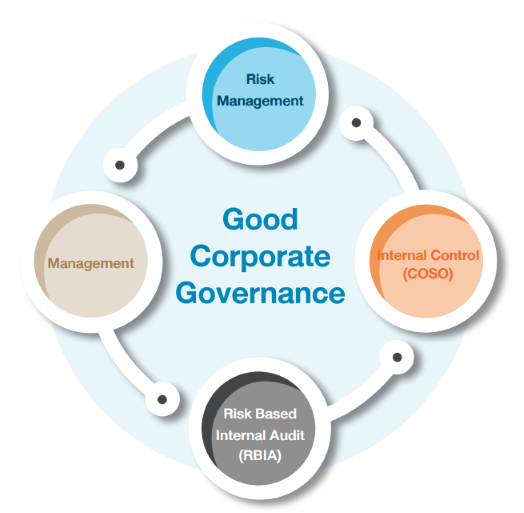
Stonehenge Inter Public Company Limited) (hereinafter referred to as the “Company”) recognizes the importance and necessity of adopting a risk management system in accordance with international standards. The Company aims to become an organization that delivers customer satisfaction, maintains a positive image, and develops its operations in a unified manner across the entire organization. To demonstrate its commitment to Good Corporate Governance (GCG), the Board of Directors has established an organization-wide risk management policy and assigned the Sustainability and Risk Management Committee to implement the policy, establish systems, and assess various risks arising from both internal and external factors. The Committee is also responsible for determining appropriate risk management approaches to ensure risks remain at an acceptable level, as well as communicating, providing training and workshops to employees to raise awareness of the importance of risk management, monitoring key risk issues, and ensuring appropriate and timely responses.
This risk management policy applies to all Company activities (the full policy is disclosed on the Company’s website under the “Sustainable Development” section, subtopic “Sustainability Policies and Guidelines”). Currently, the Company manages various types of risks through Good Corporate Governance (GCG), anti-corruption policies and measures, internal control systems, and performance evaluation systems. In practice, the Company has consistently been able to manage risks in accordance with the established framework.
Policy & Plan Description
Risk Management Process
All risks that may affect the achievement of the organization’s strategic objectives including risks arising from operational departments, key business decisions, and critical routine operations must be managed through the enterprise risk management process, which consists of the following five steps:
Objective Establishment
Risk Identification
Risk Assessment
Risk Management
Risk Monitoring and Review
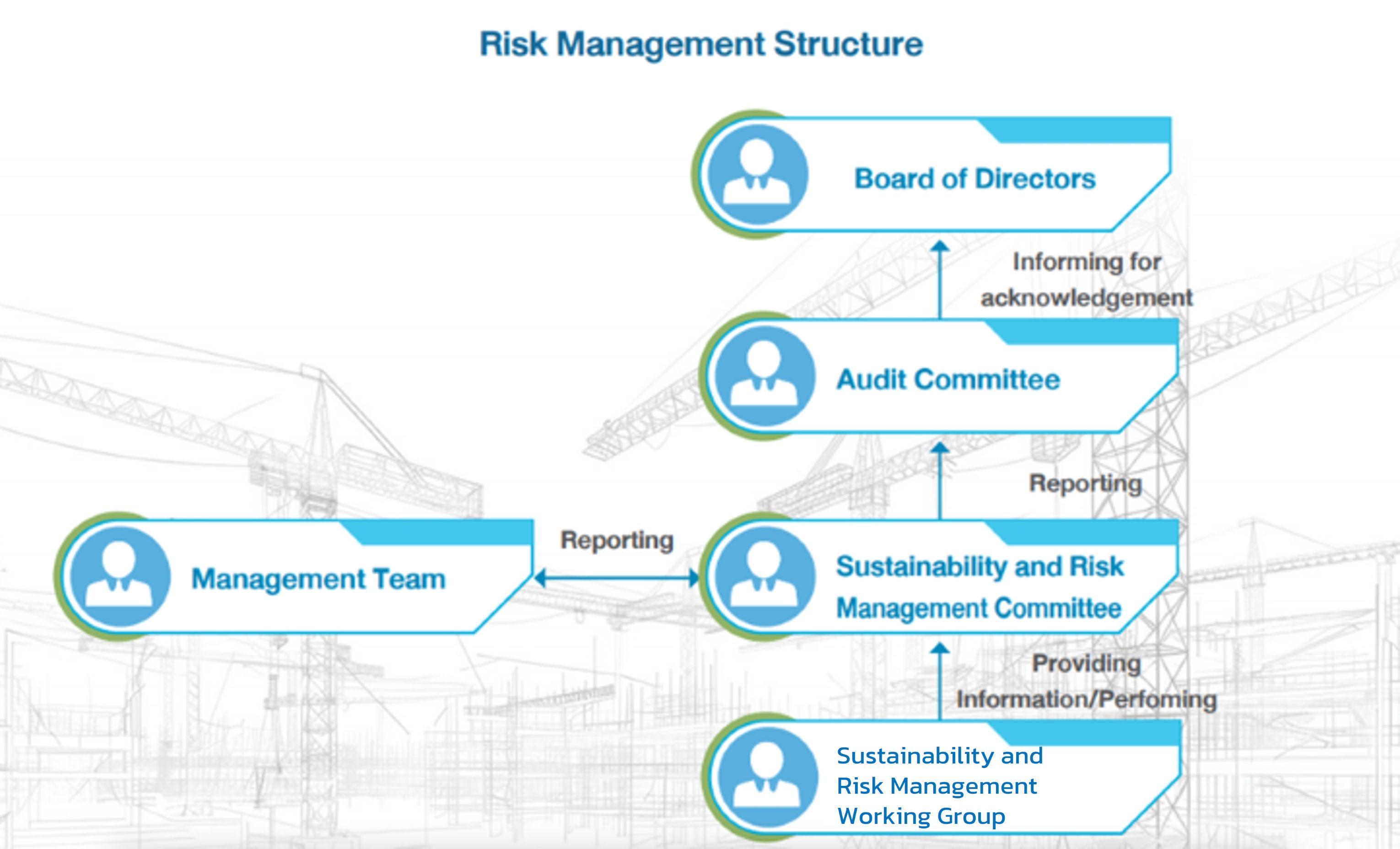
Risk Management Structure of the Group
Board of Directors: The Board oversees enterprise-wide risk management and is responsible for establishing and approving the risk management policy, as well as ensuring that overall risk management is carried out effectively.
Audit Committee: The Audit Committee supports the Board of Directors by reviewing the accuracy and reliability of financial reports. It also reviews the adequacy and effectiveness of the Group’s internal control system, internal audit function, risk assessment and risk management systems, and corporate governance practices. The Committee provides recommendations to enhance the effectiveness of risk management processes, internal controls, and corporate governance.
Sustainability and Risk Management Committee: The committee is responsible for overseeing overall risk management, defining and reviewing policies, objectives, and the enterprise-wide risk management framework to ensure they are appropriate, effective, aligned with international standards, and consistent with the Group’s operational strategies, business plans, and changing circumstances. It also supervises, monitors, and reviews key risk management plans and reports, providing recommendations to ensure that the Group can manage risks within acceptable levels in accordance with the risk management policy.
Sustainability and Risk Management Working Group: Comprising executives and employees under the leadership of the Chief Operating Officer, the group is responsible for identifying and assessing risks within their respective units, including risks arising from both internal and external factors. It develops adequate and appropriate risk management measures and internal controls to ensure risks remain within acceptable levels and communicates these measures to employees within their units to ensure proper implementation.
The Group’s risk management process requires all departments and subsidiaries to prepare risk status reports and submit them to the Sustainability and Risk Management Committee quarterly. These reports are then forwarded to the Audit Committee and the Board of Directors. Additionally, the Group requires that risk assessment criteria be reviewed at least once a year or whenever there is a significant change in business strategy.
Risk Factors — Overview
Risk Factors — Introduction
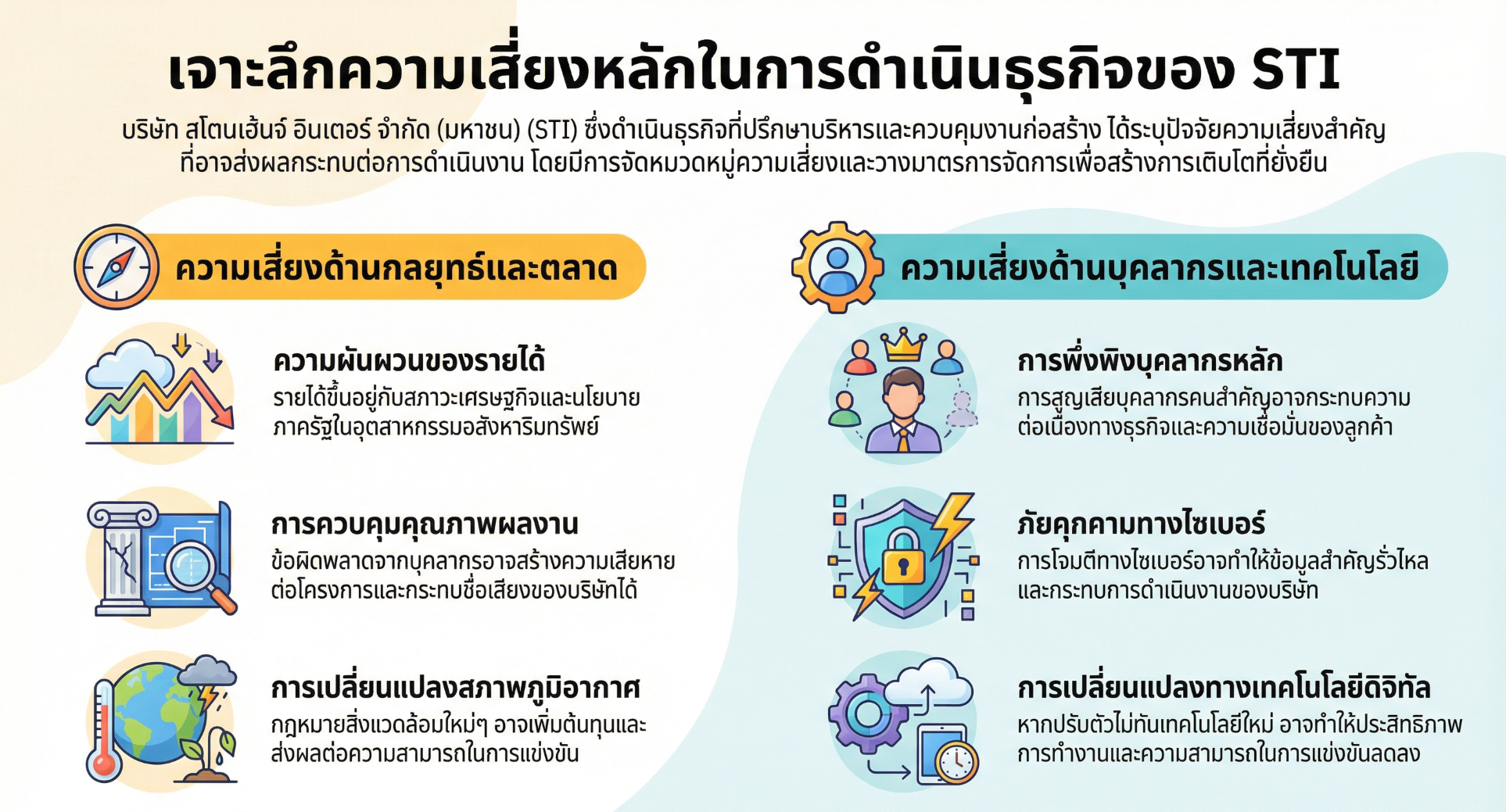
Risks to the Company's Business Operations
Risk Register
| Risk Name | Risk Characteristics | Consequences | Management Measures | Related Risk Factors |
|---|---|---|---|---|
| Risk from Income Volatility | Risk associated with revenue volatility arises from the Group’s reliance on the growth of the real estate development sector and construction projects, both of which are directly linked to overall economic conditions and government policies. Changes in infrastructure budgets or government measures that affect the construction industry may lead to a reduction in project volume. In addition, the high level of competition in the construction management and supervision consulting market both in terms of service quality and professional fees further contributes to the uncertainty of the Group’s revenue. | If an economic slowdown occurs, or if the government faces budget constraints, the number of construction projects may decline, which would affect the Group’s operating revenue and cash inflows during each period. In addition, delays in service-fee disbursements tied to project progress, or a lack of continuity in securing new projects, may lead to revenue volatility and impact the Group’s financial liquidity as well as its ability to manage costs effectively. | The Group has established the following risk management policies:
| 728 · Description: Volatility in the industry in which the company operates · Info category: STRATEGIC_RISK · 730 · Description: Government policy · Info category: STRATEGIC_RISK |
| Risks Associated with Investments in Related Businesses | The Company has policies and strategies to expand revenue growth and enhance the Group’s competitiveness through investments in related businesses or ventures with strong growth potential. However, investments in new businesses carry uncertainties arising from various factors, such as economic volatility, the level of market competition, the readiness and expertise of personnel in management, as well as the effectiveness of coordination between departments. These factors may result in the performance of the invested businesses falling short of the expected targets. | If the performance of the invested businesses does not meet the planned targets, the Company may receive returns that are lower than expected. This could negatively affect the Company’s financial position, overall operating results, as well as the confidence and perception of shareholders and stakeholders. |
| 1715 · Description: Economic risk · Info category: STRATEGIC_RISK · 1716 · Description: New business risk · Info category: STRATEGIC_RISK |
| Risk from Dependence on Executive and Personnel | The construction management and supervision consulting business relies heavily on the knowledge, expertise, and experience of engineers and professional personnel. In particular, key executives whose credibility and trustworthiness are recognized by clients play a crucial role in the Company’s success. If changes occur in key executive positions, or if the Company becomes overly dependent on certain groups of key personnel, it may result in a lack of continuity in business operations and negatively affect the Company’s capability to manage projects effectively. |
|
| 738 · Description: Reliance on employees in key positions · Info category: OPERATIONAL_RISK |
| Risks Related to Recruitment and Development of Personnel to Support the Company’s Growth | The construction management and supervision business, including design services, relies on personnel with specialized expertise such as highly experienced and skilled engineers and architects who are scarce in the labor market. Competitive pressures within the industry and the tendency of competitors to attract talent by offering higher compensation make recruitment and retention increasingly challenging. In addition, the Company must prepare a new generation of personnel to succeed existing leaders in order to support the long-term growth of the business. | If the Company is unable to recruit, develop, and retain personnel adequately and on a continuous basis, the following impacts may occur:
| The Company has established human-resource risk management measures to ensure effective recruitment, development, and retention of personnel, as follows:
| 739 · Description: Shortage or reliance on skilled workers · Info category: OPERATIONAL_RISK · 742 · Description: Human error in business operations · Info category: OPERATIONAL_RISK · 746 · Description: Delays in the development of future projects · Info category: OPERATIONAL_RISK |
| Risks Associated with Quality Control of Work | The Company’s construction management and supervision services, including design work, rely directly on the knowledge, expertise, and experience of engineers and architects. Therefore, there is a risk if personnel provide consulting services, supervise construction, or prepare documents, reports, or construction drawings that contain errors or incomplete information, as such issues may cause damage to the client’s project. |
|
| 745 · Description: Loss or damage from non-compliance of partners or counterparties · Info category: OPERATIONAL_RISK · 736 · Description: Damage to company image and reputation · Info category: STRATEGIC_RISK |
| Safety and Environmental Risks | The Company’s operations are related to construction projects, which may impact the environment and the safety of workers as well as surrounding communities. Such impacts may arise from noise, dust, smoke, and construction waste. In addition, the government and relevant authorities are increasingly tightening regulations governing construction activities, such as limiting daily working hours, prohibiting work on holidays or during nighttime, and enforcing stricter environmental impact monitoring. Furthermore, natural disasters such as storms or flooding may also affect the continuity of operations. |
|
| 756 · Description: Change in laws and regulations · Info category: COMPLIANCE_RISK · 730 · Description: Government policy · Info category: STRATEGIC_RISK · 742 · Description: Human error in business operations · Info category: OPERATIONAL_RISK · 1717 · Description: ESG risk · Info category: STRATEGIC_RISK · 751 · Description: Impact on the environment · Info category: OPERATIONAL_RISK |
| Safety, Occupational Health, and Environmental Risks in the Workplace | Working in construction areas involves risks of accidents and unexpected incidents, such as working at heights, structural subsidence, or fires, all of which may affect the health and safety of employees, business partners, and nearby communities. These risks are also considered human-rights–related risks, to which the Company places the highest importance. | If an accident or safety-related incident occurs, it may result in loss of life, injuries to employees or other involved parties, and damage to property, as well as compensation and medical expenses. Such incidents can negatively affect the Company’s reputation, credibility, and corporate image. | The Company has established strict management guidelines, placing strong emphasis on protecting the health and safety of its personnel, as follows:
| 742 · Description: Human error in business operations · Info category: OPERATIONAL_RISK · 736 · Description: Damage to company image and reputation · Info category: STRATEGIC_RISK · 749 · Description: Safety, occupational health, and working environment · Info category: OPERATIONAL_RISK · 1717 · Description: ESG risk · Info category: STRATEGIC_RISK · 753 · Description: Impact on human rights · Info category: OPERATIONAL_RISK |
| Risk of corruption | Corruption risks may arise from improper actions or omissions by employees, executives, or individuals involved with the Company for the purpose of obtaining personal or undue benefits for themselves or others. This includes giving or accepting bribes, offering or soliciting improper advantages from government officials, private entities, or business partners in exchange for preferential business treatment. | If a corruption incident occurs, it may adversely affect the Company’s reputation, credibility, and corporate image, and may also result in legal and financial damages, as well as harm relationships with government agencies, business partners, and other stakeholders. | The Company has established a clear Anti-Corruption Policy, which has been communicated to the Board of Directors, executives, and all employees through the Company’s website, the internal Intranet, and internal bulletin boards. All personnel are required to acknowledge and sign their commitment to comply with the policy as a unified standard of practice. In addition, the Company has set up a Whistleblowing channel via the email of the Independent Director, allowing stakeholders to directly report clues, suggestions, or complaints related to corruption. The Company is committed to fostering a transparent and well-governed corporate culture to continuously prevent all forms of corruption. (Details can be found under the section “Whistleblowing”.) | 754 · Description: Corruption · Info category: OPERATIONAL_RISK |
| Risk from Liquidity Management | The Company’s primary operating costs consist of fixed personnel expenses, while most of its revenues are derived from service fees under construction consulting contracts, which are collectible based on work milestones upon completion. Any mismatch between the timing of revenue inflows and expense outflows may affect the Company’s financial liquidity, particularly in cases where client payments or contract renewals are delayed. | If liquidity is not managed adequately, the Company may face a shortage of working capital for routine operations, affecting its ability to pay personnel expenses and settle obligations with business partners. This may also impact the confidence of clients and financial institutions. |
| 763 · Description: Default on payment or exchange of goods · Info category: FINANCIAL_RISK · 733 · Description: Business operations of partners in the supply chain · Info category: STRATEGIC_RISK · 745 · Description: Loss or damage from non-compliance of partners or counterparties · Info category: OPERATIONAL_RISK |
| Legal, Contractual, and Compliance Risks | Compliance risks arise because the Group’s business operations are subject to various laws, regulations, and requirements issued by regulatory authorities. These include Acts, Royal Decrees, as well as ministerial regulations related to business operations such as environmental laws, laws governing the engineering and architecture professions, and the PDPA – Personal Data Protection Act. Changes in these laws or regulations over time may require the Company to continuously adapt and may pose risks if the Company is unable to fully comply with all requirements. | If the Group is unable to fully comply with applicable laws, regulations, or contractual obligations, it may result in negative impacts on its reputation, credibility, and the trust of business partners and regulatory authorities. The Group may also face legal penalties or fines. In addition, non-compliance may lead to the loss of business opportunities or delays in the execution of certain projects. | The Group has established the following measures to manage compliance risks:
| 756 · Description: Change in laws and regulations · Info category: COMPLIANCE_RISK · 757 · Description: Laws and regulations is not favorable for doing business · Info category: COMPLIANCE_RISK · 758 · Description: Violations of laws and regulations · Info category: COMPLIANCE_RISK · 1723 · Description: Legal risk · Info category: COMPLIANCE_RISK · 736 · Description: Damage to company image and reputation · Info category: STRATEGIC_RISK |
| Climate Change Risk | The global changes in climate have prompted many countries, including Thailand, to accelerate policies aimed at reducing greenhouse gas emissions and moving toward a low-carbon society. This may require businesses to adapt to comply with new laws, government measures, and growing customer expectations for environmentally responsible practices. For the Company, climate-related risks may arise from:
|
|
| 751 · Description: Impact on the environment · Info category: OPERATIONAL_RISK · 1719 · Description: Climate change and disasters · Info category: STRATEGIC_RISK |
| Risk from Internet or Cyber Threats and Data Security | In the present, the Group has adopted information technology in its business operations, management processes, and data connectivity between departments, as well as in communications with stakeholders via the internet. This has led to increasing exposure to complex and severe cybersecurity threats, such as the use of artificial intelligence (AI) in cybercrime, more sophisticated phishing emails, network attacks, or unauthorized access to internal information—such as commercial data, service development information, or customers’ personal data—which may be destroyed or misused in ways that could cause significant harm to the organization. | Cybersecurity threats may directly affect the Group’s operations in terms of finance, service delivery, and customer confidence. If internal information or personal data is leaked, or if the information technology systems become unavailable, it may lead to reputational damage, diminished organizational credibility, and disruptions to business continuity. | The Group has implemented comprehensive information technology security measures as follows:
| 741 · Description: Systems or internal control system · Info category: OPERATIONAL_RISK · 744 · Description: Information security and cyber-attack · Info category: OPERATIONAL_RISK · 736 · Description: Damage to company image and reputation · Info category: STRATEGIC_RISK |
| Risks from Changes in Digital Technology | The rapid transformation of digital technology in the engineering field—such as technologies used in design, project management, and construction supervision—requires the Company to continually adapt its work processes. If personnel lack sufficient knowledge, expertise, or the ability to adapt to new technologies, operational efficiency may decline and the quality of services delivered to clients may be negatively affected. |
|
| 732 · Description: Changes in technologies · Info category: STRATEGIC_RISK |
Risks to Securities Holders' Investment
Risk Register
| Risk Name | Risk Characteristics | Consequences | Management Measures | Related Risk Factors |
|---|---|---|---|---|
| Risk of uncertainty in the ability to pay dividends and the return that investors will receive | Risks related to the uncertainty of dividend payments and returns to investors arise from multiple factors that affect the Company’s operating performance, such as overall economic conditions, capital reserves required for investment plans, or external circumstances beyond the Company’s control. These factors may result in the Company being unable to pay dividends in accordance with its policy or shareholders’ expectations. In addition, fluctuations in the Company’s share price may be influenced by economic factors, crises, or changes in laws and regulations. | If the Company’s operating results do not meet targets, or if it becomes necessary to reserve capital to support investment plans, the amount of dividends paid may be reduced or may not be paid in certain years. As a result, shareholders may receive returns lower than expected. In addition, fluctuations in the share price caused by external factors may reduce the value of investments, affecting shareholder confidence and the Company’s reputation in the capital market. | The Company continuously monitors and evaluates economic conditions and external factors while managing capital prudently to maintain a balance between dividend payments and investments for future growth. The Company also communicates financial information and operational outlook transparently to shareholders in order to build understanding and confidence in its ability to generate sustainable returns. | 769 · Other name: The uncertainty of the returns that investors may receive as expected. · Description: Other · Info category: HOLDER_RISK |