CG Policy · 2025
In this section7 topics
Corporate Governance Policy
Has a Corporate Governance Policy
Yes
Policy Description
The Board of Directors of Stonehenge Inter Public Company Limited and its subsidiaries (collectively referred to as the Group) places great importance on good corporate governance as a foundation for conducting business fairly, within a framework of sound governance principles that emphasize transparency and accountability. The Group operates under the principle of achieving sustainable business growth while recognizing the responsibilities of the business sector toward the economy, society, and the environment, and ensuring that all stakeholders receive fair and optimal benefits.
The Board of Directors has established a policy to review and update the Group’s corporate governance policy at least once a year to ensure alignment with internationally recognized corporate governance standards based on the principles of good corporate governance for listed companies 2017 (CG Code – Corporate Governance Code) issued by the Office of the Securities and Exchange Commission ("SEC"), as well as the criteria of the Corporate Governance Survey Project for Thai Listed Companies conducted by the Thai Institute of Directors Association (IOD), for application in the Group’s governance practices.
The Board of Directors is strongly committed to ensuring strict compliance with the Group’s corporate governance and business ethics policies. It requires the Board, executives, and all employees to adhere to these policies as published on the company’s intranet, on the company website https://www.sti.co.th , and as presented in Attachment 5 of the Annual Information Form 2025 (Form 56-1 e-One Report).
Policy Document Link
https://www.sti.co.th/good-corporate-governance
Policy & Practices — Board of Directors
Has Policy & Guidelines for the Board
Yes
Board Guidelines
| Guideline | Other — Please Specify | Detail | Document Link |
|---|---|---|---|
| Nomination of Directors | Guidelines for Director Recruitment The company has established policies and criteria for the recruitment and appointment of directors as follows: The Board of Directors is appointed by the shareholders to oversee the company’s operations in compliance with the law, policies, objectives, and the company’s Articles of Association, as well as to adhere to good corporate governance principles for the best interests of the company and its shareholders. The company’s policy for selecting directors both at the board level and the individual level is to include qualified experts from various fields whose competencies align with the company’s strategies and business nature. Additionally, at least one independent director must possess expertise in accounting and finance. Qualifications of Company Directors
Qualifications of Independent Directors Independent directors must not serve as executives, must be independent from management and controlling shareholders, and must not have business relationships with the company or its subsidiaries that could impair their independent judgment. They must also meet the qualifications specified by the Notification of the Capital Market Supervisory Board. Full details regarding the qualifications of directors and independent directors are provided in the Group’s Corporate Governance Policy, available on the company’s website: https://www.sti.co.th/good-corporate-governance , and presented in Attachment 5 of the Annual Report 2025 (Form 56-1 e-One Report). Director Recruitment and Appointment The company places great emphasis on candidates with strong knowledge, capabilities, experience, professional background, leadership qualities, broad vision, integrity, and ethics, as well as the ability to devote sufficient time for the company’s benefit. The company also considers board diversity and prepares a Board Skill Matrix to identify skill gaps and qualifications necessary to align with the board’s composition and the company’s business strategies. Additionally, the company may utilize the Director Pool of the Thai Institute of Directors Association as a resource when recruiting new directors. The recruitment process follows transparent and well-defined criteria, in full compliance with applicable laws and regulations. The recruitment and appointment of directors undergoes careful review by the Board of Directors and the Nomination and Remuneration Committee, which evaluates suitable candidates and their qualifications before presenting the nominations, along with sufficient background information, to the Board of Directors and/or shareholders for appointment. | https://www.sti.co.th/good-corporate-governance | |
| Determination of Director Remuneration | Remuneration for Directors and Executives The company determines director remuneration based on each individual’s expertise, experience, duties, responsibilities, and the expected benefits to the company. The Board of Directors has established clear policies and criteria for director remuneration, following the recommendations of the Nomination and Remuneration Committee, which proposes guidelines and methods for determining meeting allowances, monthly retainers, special remuneration, and other benefits for the company’s directors. These proposals are submitted for approval at the Annual General Shareholders’ Meeting each year. The remuneration structure is designed to be transparent, verifiable, and benchmarked against companies in the same industry with comparable business size. It must also be set at a level that is appropriate to attract and retain qualified directors. Remuneration of the Chief Executive Officer The Nomination and Remuneration Committee evaluates and determines the CEO’s remuneration and bonus before proposing it to the Board of Directors for approval. The CEO’s remuneration includes both short-term and long-term components as follows:
The Nomination and Remuneration Committee is responsible for evaluating the CEO’s performance. The Board of Directors reviews and approves the evaluation results to determine the CEO’s salary adjustment rate, which must be approved by the Board. The adjustment must also remain competitive with companies in the same industry and of similar size to ensure the company can attract and retain high-quality executives. Details of directors’ and executives’ remuneration for the year 2025 are provided in Section 8.1.2: Attendance and Remuneration of Individual Board Members. | https://www.sti.co.th/good-corporate-governance | |
| Independence of the Board of Directors from the Management | The Board of Directors plays a crucial role in overseeing the company’s operations for the best interests of the company and its shareholders as a whole. To ensure a proper balance of power within the organization, the company separates the positions of Chairperson of the Board, Executive Chairman, and Chief Executive Officer so that these roles are not held by the same individual. The Chairperson of the Board is an independent director under the good corporate governance guidelines of the Stock Exchange of Thailand and has no relationship with management. Additionally, the company has clearly defined the roles and responsibilities of the Chairperson, the Executive Chairman, and the Chief Executive Officer. (Details appear in the Group’s Corporate Governance Policy published on the company’s website: https://www.sti.co.th/good-corporate-governance and in Attachment 5 of the Annual Information Form 2025 (Form 56-1 e-One Report)). The Board of Directors is responsible for overseeing management to ensure that operations align with the company’s goals and strategic direction for the maximum benefit of the company, while considering the interests of all stakeholders. Directors must not seek personal gain or benefit for any individual, nor engage in any actions that conflict with or compete against the interests of the company or its subsidiaries. Directors must adhere to high ethical standards, performing their duties with responsibility, diligence, and integrity. They must also ensure the company operates in accordance with its objectives, Articles of Association, resolutions of the Board and shareholders, as well as applicable laws and the rules and regulations of the Stock Exchange of Thailand and the Office of the Securities and Exchange Commission. Meanwhile, the Executive Chairman acts as the leader of the management team, overseeing management and supervising general business operations of the company. The Chief Executive Officer, as the highest-ranking executive, is responsible for carrying out daily operations and managing the company in accordance with the directions set by the Board of Directors and the Executive Committee, including approving various transactions related to the company’s ordinary course of business. | https://www.sti.co.th/good-corporate-governance | |
| Director Development | The Board of Directors encourages and supports directors and executives in receiving training to enhance and develop their knowledge, understanding, and skills required for performing their duties both in business matters and other relevant programs, including additional knowledge related to the company’s corporate governance. This aims to support effective performance of duties and improve overall operational efficiency. In addition, the company requires that all newly appointed directors undergo an orientation program and ensures the continuous dissemination of essential and beneficial information and knowledge relevant to their responsibilities. | https://www.sti.co.th/good-corporate-governance | |
| Board Performance Evaluation | The Board of Directors conducts performance evaluations for both the entire Board and individual directors. The Board and its subcommittees perform a self-assessment at least once a year. This process enables the Board to review its performance, identify issues and obstacles, and jointly consider suggestions to enhance the Board’s efficiency and effectiveness in carrying out its duties. The company discloses the criteria, procedures, and overall evaluation results of the Board of Directors in the Annual Information Form 2025 (Form 56-1 e-One Report). In addition, the company assigns the Nomination and Remuneration Committee to evaluate the performance of the Chief Executive Officer. The evaluation criteria consist of 10 key areas: 1.Leadership 2.Strategy formulation 3.Strategy implementation 4.Financial planning and performance 5.Relationship with the Board of Directors 6.External relationships 7.Management and employee relations 8.Succession planning 9.Knowledge of products and services 10.Personal attributes. Furthermore, directors may provide open-ended comments on the CEO’s strengths and areas for development to improve work performance. The evaluation process of the Nomination and Remuneration Committee includes defined performance indicators, which are reviewed annually together with the CEO’s evaluation form. The CEO’s performance evaluation results are confidential and cannot be disclosed. These results are used to determine the CEO’s remuneration and incentive awards, which are then submitted to the Board of Directors for approval. | https://www.sti.co.th/good-corporate-governance | |
| Corporate Governance of Subsidiaries and Associated Companies | The company has a policy to invest in other businesses that are related to or supportive of its core business-businesses with strong potential and the ability to generate long-term profits for the company. The company exercises close control and oversight over the management of its subsidiaries and joint ventures to safeguard the company’s investment interests sustainably, enhance value creation, and strengthen stakeholder confidence. Accordingly, the company has established a policy for the control and supervision of subsidiaries and joint ventures in which the company invests. The full version of this policy is provided in the Group’s Corporate Governance Policy published on the company’s website: https://www.sti.co.th/good-corporate-governance , and is included in Attachment 5 of the Annual Information Form 2025 (Form 56-1 e-One Report). | https://www.sti.co.th/good-corporate-governance | |
| Other guidelines regarding the board of directors | Policy on Holding Directorships and Executive Positions in Other Companies | The Board of Directors places great importance on the efficiency of directors and executives in performing their duties, ensuring they can fully dedicate sufficient time to overseeing the company’s operations. Therefore, the company has established a policy regarding the holding of directorships in other companies or legal entities that are not subsidiaries or joint ventures of the company. Such positions must not obstruct or negatively affect the performance of duties. Each director and executive may hold directorships in no more than five other listed companies, and they are prohibited from holding any position with similar responsibilities in other legal entities that are not subsidiaries or joint ventures of the company. However, the company does not impose limits on the number of directorships held in subsidiaries within the Group. Additionally, the Board has no policy of assigning executives to serve as directors in companies outside the Group. If any senior executive wishes to accept a directorship in another company, prior approval from the Executive Committee is required unless the position is in a non-profit charitable organization. In all cases, the external position must not conflict with applicable laws, regulations, or the company’s business operations, and executives must not use their corporate position to endorse or support external business interests. | |
| Other guidelines regarding the board of directors | Board Meeting | 1. Meeting Frequency The company holds at least four Board meetings per year. The Company Secretary informs directors of the annual meeting schedule in advance during the August meeting of the preceding year, enabling directors to allocate their time and attend all meetings. Extra meetings may be convened as necessary. Each director is responsible for attending no less than 75% of all Board meetings held during the year. In Board Meeting No. 4/2024-25 held in August 2025, the Company Secretary communicated to the Board the meeting schedule for the 2026 fiscal year four meetings to be held in the second week of the month preceding each quarterly financial statement announcement, and within 45 days before the year-end financial announcement. 2. Meeting Agenda Preparation The Chairperson and the Chief Executive Officer jointly consider and approve matters to be included on the meeting agenda, and all directors may propose items beneficial to the company for inclusion. Each meeting also includes agenda items for acknowledgment and/or consideration related to performance monitoring and oversight. The Chairperson may also call Board meetings via electronic media in accordance with legal requirements. 3. Meeting Materials and Documentation The Company Secretary distributes the meeting notice, agenda, and supporting documents to directors at least 7 days before the meeting. Delivery may be made via email. The Company Secretary attends the meeting to record minutes, which are then submitted to the Chairperson for signature and presented for approval in the next meeting. All documents and information related to Board meetings are systematically stored for easy access and review by directors and authorized persons. 4. Meeting Quorum and Electronic Attendance A quorum requires that at least half of all directors be present. If any director cannot attend in person due to unavoidable reasons, they may request permission from the Chairperson to join the meeting via electronic media, subject to strict compliance with the company’s Articles of Association and applicable electronic meeting laws. 5. Voting and Meeting Procedures The Chairperson presides over all Board meetings. If the Chairperson is absent, the directors present shall select one among themselves to chair the meeting. Each director has one vote, and resolutions are passed by majority vote. Directors with conflicts of interest shall not attend or vote on the relevant agenda item. In case of a tie, the Chairperson has a casting vote. Directors who disagree with a resolution may request that their dissenting opinion be recorded in the minutes or submit a written objection to the Chairperson. For a valid vote, at least two-thirds of eligible directors must be present. 6. Access to Information and Advisors For important agenda items, directors have the right to request necessary information from management, the Company Secretary, or other authorized executives. The Board may also seek opinions from external advisors or professional experts when necessary, at the company’s expense. 7. Participation of Senior Management The company encourages relevant senior executives to attend Board meetings when appropriate to provide essential information and support discussions. This also ensures that executives directly understand Board policies for effective implementation. 8. Meetings of Non-Executive Directors Non-executive directors may hold separate meetings as necessary to discuss management-related matters without the presence of the management team. The Chairperson will inform the Chief Executive Officer of the outcomes of such meetings. 9. Executive Committee Meetings The company holds Executive Committee meetings at least once a month to ensure operational agility and continuous monitoring of business developments. Matters reviewed by the Executive Committee are reported to the Board of Directors in the subsequent Board meeting for acknowledgment, enabling the Board to maintain timely oversight of management activities. |
Code of Conduct
Introduction
The Company is committed to conducting its business with transparency and fairness, taking into account its responsibility toward all stakeholders, which is part of the Company’s corporate governance policy. Accordingly, the Board of Directors has established a written Business Code of Conduct to ensure that directors, executives, and employees at all levels are informed, understand, and apply these ethical standards as guidelines in performing their duties and responsibilities, both at the managerial and operational levels.
Furthermore, the Company requires directors, executives, and employees to study, acknowledge in writing, and strictly comply with the Company’s Business Code of Conduct. Any negligence or violation is subject to disciplinary action and/or applicable legal penalties, as the case may be. If any conduct that may violate the business ethics of the Group is observed, it must be reported to the supervisor or the Chief Executive Officer, depending on the situation.
The Company has also published the Business Code of Conduct on its website at https://www.sti.co.th/business-ethics and has implemented a Whistleblower Policy to ensure protection and fairness for employees who provide information or report concerns.
In 2025, the Company recorded no incidents of violations related to business ethics or professional ethics by directors, executives, or employees, and no whistleblowing reports or complaints were received from either internal or external parties, including regulatory authorities.
Has a Business Code of Conduct
Yes
Code of Conduct Description
Ethics in Business Operations
The Board of Directors has adopted the principles of sustainable business operations as a guiding framework under the Company’s business philosophy, with the aim of fostering long-term business sustainability, safeguarding the interests of stakeholders, and considering social and environmental factors. The Company also provides opportunities for stakeholders to express their views on its operations as part of the mechanisms and processes that ensure genuine and earnest implementation, ultimately leading toward becoming a truly good governance organization, as follows:
Strictly comply with applicable laws, rules, and regulations.
Follow the Company’s Corporate Governance Policy and Business Ethics.
Commit to conducting business with transparency, honesty, and fairness.
Uphold good citizenship and instill this awareness among employees.
Consider the interests and impacts of the Company’s operations with fairness and social equity toward all stakeholders.
Operate the business responsibly and safeguard the interests of stakeholders and society.
Establish a robust operational system to prevent corruption through a stringent and appropriate internal audit system.
Require directors, executives, and all employees to participate in anti-corruption efforts, report conflicts of interest, communicate effectively, and promote quality of work life.
Provide stakeholders with channels for submitting complaints and feedback, along with protective measures for complainants or whistleblowers.
Drive the organization toward sustainability by raising awareness of good corporate governance, social responsibility, and environmental stewardship.
In addition, the Company’s business operations involve construction management and the provision of architectural and structural engineering design service sprofessions subject to regulatory oversight under specific Acts and governed by professional regulatory councils. The Company therefore recognizes the importance of adhering to professional ethics. Accordingly, executives and relevant employees are required to strictly comply with the regulations of their respective professional councils, including:
The Code of Ethics for Licensed Engineers under the Regulations of the Council of Engineers regarding Professional Engineering Ethics and Misconduct Leading to Disrepute of the Profession B.E. 2559, issued under the Engineer Act B.E. 2542.
The Code of Ethics for the Architectural Profession under the Regulations of the Architects Council B.E. 2558.
Code of Conduct Link
https://www.sti.co.th/business-ethics
Code of Conduct Practices
| Guideline | Detail | Document Link |
|---|---|---|
| Prevention of Misuse of Inside Information | The Company places great importance on ensuring that all transactions are considered with transparency and with the Company’s best interest as the primary focus. For this reason, the Company has established a Conflict of Interest Management Policy requiring directors, executives, and employees of the Group to avoid situations that may create conflicts of interest, in accordance with good corporate governance principles. The following practices have therefore been prescribed for directors, executives, and employees of the Group:
| https://www.sti.co.th/business-ethics |
| Anti-corruption | The Group is committed to conducting its business with honesty, transparency, fairness, and in accordance with good corporate governance principles. The Company supports and encourages its directors, executives, and employees to recognize the importance of and develop a strong awareness toward resisting all forms of corruption. It is the responsibility of directors, executives, and employees to promote integrity and fairness within a robust operational framework and an effective internal control system, in order to protect the Company’s reputation and ensure the efficient and optimal use of Company assets. The operational guidelines are as follows:
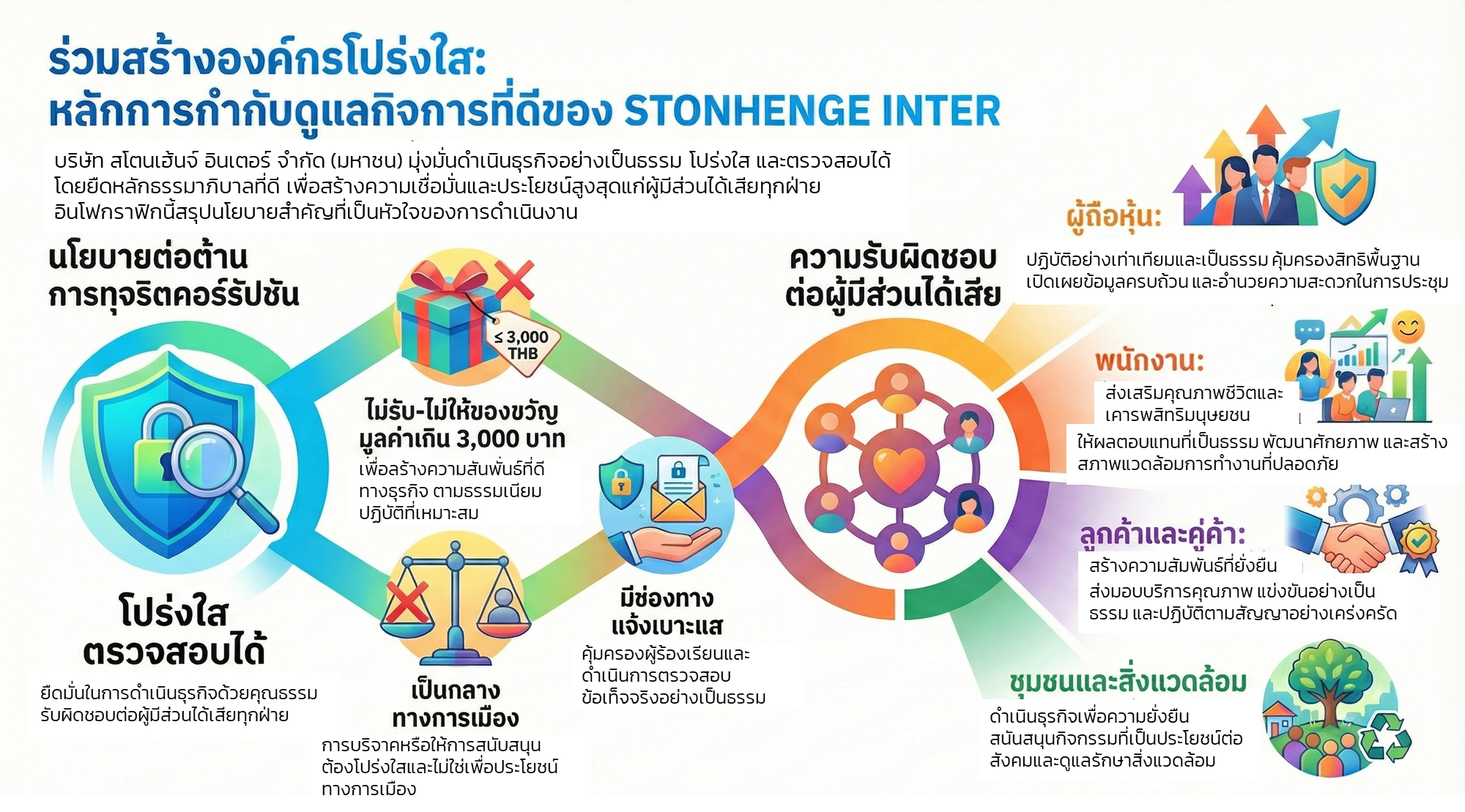
10.1 Political Contributions: The Group maintains a politically neutral stance and does not support or promote any political party. 10.2 Donations and Sponsorships: These are part of the Company’s social responsibility and must be carried out with transparency. 10.3 Gifts and Entertainment: Given for relationship-building during festivals or customary occasions, with a maximum allowable value of no more than THB 3,000. | https://www.sti.co.th/anti-corruption |
| Whistleblowing and Protection of Whistleblowers | To provide a channel for stakeholders, including employees, to report violations of the law, behavior indicative of corruption, misconduct by individuals within the organization, or complaints related to corporate governance and ethical violations, the Company gathers such information to improve and enhance the quality of the Group’s operations and to prevent potential future issues. The procedures for receiving complaints are as follows: Stakeholders, both internal and external to the Company and its subsidiaries, may submit written complaints regarding business ethics through the following channels: 1. Via email to designated complaint recipients:
2. Via postal mail sent to the designated recipients at: Corporate Governance Committee or Audit Committee Stonehenge Inter Public Company Limited 163 Soi Chokchai Ruammit (Ratchada 19), Ratchadaphisek Road, Din Daeng Subdistrict, Din Daeng District, Bangkok 10400 Submitting complaints to the Audit Committee serves as a direct channel to the Board of Directors (without passing through the Company’s management). The Board has authorized the Audit Committee whose members are all independent directors to receive such reports or complaints, conduct investigations, and report the findings to the Board of Directors. Additionally, the Board has established a Whistleblower Policy to ensure protection and fairness for employees who report information or raise concerns about corruption, violations of laws, rules, company regulations, or business ethics within Stonehenge Inter Public Company Limited and its Group. This policy has been announced for implementation by all directors, executives, and employees and has been published on the Company’s website to ensure that relevant stakeholders are informed of the policy and its measures. | https://www.sti.co.th/company-policy |
| Preventing the Misuse of Inside Information | The Company places great importance on ensuring fairness and equality for all groups of shareholders. Insider information is considered confidential, and therefore, it is the responsibility of directors, executives, and employees to use Company information properly and to maintain the confidentiality of such information. They must not disclose insider information obtained through their duties to others, nor use it for personal gain or for the improper benefit of others. The Company has established a policy on the management of insider information to prevent directors, executives, and employees from using insider information relating to the Company and its subsidiaries for improper personal benefit or for the advantage of related persons. | https://www.sti.co.th/company-policy |
| Giving or receiving gifts, entertainment, or business entertainment | The Group recognizes that building good relationships with clients and business partners is essential to the Group’s long-term success. Therefore, the Group has established the following guidelines regarding such practices:
(1) The action must not involve influencing, inducing, or rewarding any individual to obtain advantages through improper or concealed conduct, nor be intended to secure assistance or benefits. (2) The action must comply with applicable laws, Company regulations, and prescribed guidelines. (3) Gifts or hospitality must be given in the name of the Company, not in the name of an employee, and must be conducted openly and transparently. (4) The type and value of the gift or entertainment must be appropriate and suitable to the occasion. For example, during bidding processes, offering gifts or hospitality to government officials, Company employees, or related agencies is prohibited. (5) The gesture must be appropriate for the situation, such as giving small gifts during major festive seasons in accordance with general customs.
If circumstances make it impossible to decline a gift or benefit at the time it is offered, the recipient must notify their supervisor immediately and prepare a gift-receipt report. The gift must then be submitted to the Chief Executive Officer to be used as an employee reward during festive occasions or, if approved, donated to charity as appropriate. | |
| Compliance with laws, rules and regulations |
| https://www.sti.co.th/business-ethics |
| Use and maintenance of data and assets | The Company places great importance on ensuring fairness and equality for all groups of shareholders. Insider information is considered confidential; therefore, directors, executives, and employees are responsible for using Company information properly and maintaining its confidentiality. They must not disclose insider information obtained through the performance of their duties to others, nor use such information for personal gain or improper benefits. In addition, the Company respects the privacy rights of all related parties. Personal Data and Sensitive Personal Data of individuals involved in the Company’s operations must be protected in accordance with the law. Therefore, the Company has established the following guidelines:
Details of these guidelines are provided in the full version of the Company’s Business Code of Conduct, which is published on the Company’s website: https://www.sti.co.th/business-ethics | https://www.sti.co.th/business-ethics |
| Anti-competitive | Practices and Responsibilities Toward Business Competitors The Company maintains a policy of competing fairly in the marketplace and treating business competitors in strict compliance with applicable laws and relevant regulations. The Company has established the following guidelines:
| https://www.sti.co.th/business-ethics |
| Cyber security | The Company requires all executives and employees to strictly comply with the Information Technology Security Policy and all related Company regulations. This includes proper use of email and internet systems, use and communication of computer software, and controls over access and security of systems and information. These measures ensure that the Company’s computer systems are used efficiently and for the greatest benefit of the Company. They also help reduce the risk of computer system usage that may constitute an offense under the Computer Crime Act B.E. 2550, which carries criminal penalties. In addition, the Company has established a comprehensive information security system to protect the Group’s data against unauthorized access whether by employees or external parties and against computer virus attacks. Measures include installing firewall equipment to prevent and control access to the Company’s computer systems, installing anti-virus software on all computers within the Group, and implementing a data backup and recovery system through the establishment of a Disaster Recovery Plan. | https://www.sti.co.th/company-policy |
| Environmental management | The Company recognizes its role as part of society and is committed to conducting its business responsibly toward both society and the environment. The Company requires directors, executives, and employees to conduct themselves as good citizens by strictly complying with laws and/or regulations issued by regulatory authorities, cooperating consistently with government agencies, and collectively promoting and contributing to society in areas such as improving quality of life, preserving nature, and protecting the environment. The Company also seeks to prevent its operations from causing harm to the quality of life of communities, society, and the environment, while continually fostering a strong sense of social responsibility among employees at all levels. The Company places great importance on community and social activities that support the sustainable development of society, communities, and the environment, including ensuring occupational health and safety, in order to drive sustainable growth and contribute to national sustainability. Furthermore, to ensure that the Group’s business operations remain within the framework of good corporate governance upholding integrity, transparency, and accountability while giving priority to and considering the benefits and/or impacts of the Group’s business on the economy, society, environment, and all stakeholders, the Group promotes and aligns the conduct of directors, executives, and employees in the same direction. The Group has therefore established policies and practices on sustainability management to encourage stakeholder engagement and to create balance across economic, social, and environmental dimensions. | https://www.sti.co.th/sustainability/sustainability-report |
| Human rights | The Company is committed to operating its business ethically and in accordance with the principles of good corporate governance, giving importance to stakeholders in line with the Group’s corporate governance and business ethics standards. The Company recognizes the importance of human rights and respects them as fundamental values for working and living together in society. It complies with the law and conducts its business with respect for human rights in alignment with relevant international principles. The Company has therefore established a Human Rights Policy as a guideline to ensure that its business operations respect universal human rights and treat stakeholders with equality and fairness, adhering to labor rights principles as follows:
| https://www.sti.co.th/sustainability/sustainability-report |
| Occupational health and safety | The Company recognizes the importance of safety and health for employees, business partners, customers, communities, society, and all individuals involved in the operations of the Company and its subsidiaries (collectively referred to as the Group). Accordingly, the Company has established an Occupational Health, Safety, and Working Environment Policy to ensure efficient and safe working conditions that protect life and property. This policy forms an integral part of the Group’s business operations and aligns with the Group’s framework for sustainable development. | https://www.sti.co.th/sustainability/sustainability-report |
Promoting Compliance with the Code of Conduct
Promotes Compliance by Directors, Executives and Employees
Yes
Description
Monitoring and Ensuring Compliance with the Business Code of Ethics
The Company assigns responsibility to all directors, executives, and employees to acknowledge, understand, and strictly comply with the policies and practices set forth in this Business Code of Ethics. Compliance is not voluntary, and individuals cannot claim ignorance of the established guidelines. The Company has established the following governance measures:
Executives at all levels must take responsibility and ensure that employees under their supervision are informed of, understand, and strictly comply with this Business Code of Ethics.
The Executive Committee is responsible for regularly reviewing, revising, and updating the Business Code of Ethics to align with the Company’s operations as well as applicable laws and regulations.
As the Business Code of Ethics cannot cover every possible situation, all directors, executives, and employees must exercise sound judgment in each circumstance and act correctly. If any uncertainty arises in the performance of duties, they must consult their supervisors or relevant departments, such as Human Resources or Internal Audit.
The Company and its subsidiaries provide orientation training for new employees and ongoing training for directors, executives, and employees, ensuring that everyone understands the principles outlined in the Business Code of Ethics, the Company’s vision, mission, and core values. Relevant information is also available on the Company’s website (www.sti.co.th) and communicated through annual activities to ensure full awareness and understanding.
Penalties for Violations of the Business Code of Ethics
The Company has established penalties for those who fail to comply with the Business Code of Ethics, as follows:
Employees who violate the Business Code of Ethic sas well as direct supervisors who ignore or fail to correct misconduct despite being aware of it are subject to disciplinary actions ranging from verbal warnings, written warnings, wage deductions, or suspension without pay, up to employment termination. Claims of not being aware of this Code or relevant laws cannot be used as an excuse for non-compliance.
The Company will determine penalties based on the severity of the violation, along with the individual’s behavioral record and intent. The Company may impose one or multiple disciplinary actions as appropriate.
Process Document Link
https://www.sti.co.th/business-ethics
Anti-Corruption Networks & Projects
Introduction
The Company is in the process of studying and preparing to participate in the Collective Action Coalition Against Corruption (CAC), a private-sector initiative in Thailand aimed at combating corruption.
The Company places great importance on encouraging executives and employees at all levels to develop strong ethical awareness and uphold integrity in their work. The Company also promotes understanding of the potential impacts of corruption, ensuring that everyone takes part in preventing and safeguarding against corruption in all business operations and activities of the Group. This is achieved through various internal communication channels and awareness-raising activities.
Joined or Declared Intent to Join Anti-Corruption Networks
No
Networks & Projects Joined
| Network / Project |
|---|
| Thai Private Sector Collective Action Against Corruption: CAC |
| United Nations Global Compact (UNGC) |
| Participation of anti-Corruption networks and initiatives |
Material Changes & Developments in CG
Reviewed the CG Policy or Board Charter in the Past Year
Yes
Material Changes or Developments in the Past Year
Yes
Policy Review — Description
In 2025, at the Board of Directors’ Meeting No. 4/2024–25 held on August 13, 2025, the Board reviewed and updated the charters, policies, and guidelines on good corporate governance in accordance with the recommendations of the subcommittees and management. The aim was to ensure alignment with applicable laws, the CG Code, the criteria under the corporate governance survey project for listed companies, and the evolving business environment, as follows:
The Board of Directors reviews the vision, mission, and strategies annually to ensure alignment with the company’s current business objectives, and continuously monitors the implementation of the business group’s strategies as well as the performance results reported by management each quarter.
The Board reviewed the charters of the Board and all subcommittees, and resolved to continue using the existing versions from the previous year, as they remain consistent with the roles and responsibilities prescribed by law, the company’s regulations, and regulatory authorities.
All good corporate governance policies were reviewed. The good corporate governance policy relating to the reporting practices for securities holdings of directors and senior executives was updated to reflect the current requirements announced by the Office of the Securities and Exchange Commission. Clarifications were also added regarding the consideration of the tenure of independent directors. In addition, the policy on the management of inside information was revised to include clearer practices for notifying directors and executives of the blackout periods during which the company’s securities may not be traded, as well as updates to the reporting practices for securities holdings of directors and senior executives to ensure consistency with the enhanced good corporate governance policy.
Following the annual review and update of the vision, mission, strategies, business objectives, charters, policies, and good corporate governance practices as mentioned above, the company has published this information on its website under the Investor Relations section, subsections Corporate Governance and Sustainability Development, to provide transparency for shareholders, investors, stakeholders, and all relevant parties. The company has also posted the policies and guidelines on its internal announcement board.
Furthermore, the company has implemented AI to create podcast versions of 11 governance-related policies and published them on the internal corporate website (intranet) to support communication and serve as onboarding materials for new employees. All directors, executives, and employees are required to study and acknowledge these policies. The company also ensures ongoing monitoring of compliance with governance policies and good practices to support sustainable development and long-term growth.
Implements the CG Code for Listed Companies
No
CG Code — Description
The company conducts an annual review of its corporate governance policies and related practices, referencing the CG Code issued by the Office of the Securities and Exchange Commission, the criteria under the Corporate Governance Report (CGR) project of the Thai Institute of Directors Association, as well as other relevant corporate governance guidelines.
At the Board of Directors’ Meeting No. 4/2024–25 held on August 13, 2025, the Board reviewed the company’s current corporate governance policies and practices and concluded that the company’s operations are largely aligned with the principles of the CG Code and that most of these practices have already been adopted. Certain practices have not yet been fully implemented; however, the company has established appropriate alternative measures that are suitable for its business context and organizational environment, as follows:
As of September 30, 2025, the Board of Directors consists of 11 members, of whom 3 are women representing 27.27% of the Board, which is slightly below the 30% threshold. Nevertheless, the Board’s composition reflects adequate diversity in terms of skills, knowledge, experience, expertise, and professional qualifications, supporting an appropriate structure aligned with the company’s business strategies.
The Nomination and Remuneration Committee (NRC) comprises 50% independent directors, which is below the threshold set under the IOD’s CGR project. However, the current structure which includes an independent director serving as Chair in accordance with the CG Code, one additional independent director, one non-executive director, and one executive director together with clearly defined scopes of authority, responsibilities, remuneration policies, and criteria and processes for nominating directors and executives, is sufficient to ensure that the NRC can effectively and independently perform its duties in recruiting and determining remuneration for directors and senior executives who are responsible for monitoring, overseeing, and managing the company’s business operations for the maximum benefit of the company and its shareholders.
The Corporate Governance Committee consists of 33.33% independent directors, which is below the threshold under the IOD’s CGR project. Nonetheless, the current structure comprising an independent director as Chair, one non-executive director, and one executive director along with clear definitions of the committee’s authority, responsibilities, and corporate governance policies, enables the committee to effectively and independently carry out its corporate governance oversight responsibilities.
The company’s Corporate Governance Policy and the Board Charter require the Board to hold at least four meetings per year, with additional special meetings as necessary. Non-executive directors may also meet among themselves when needed. In the 2025 fiscal year, the Board held a total of four meetings. In addition, more than half of the Board members (7 out of 11 directors) also serve on the Executive Committee. This allows the Board to continuously and promptly monitor management’s performance and the business operations of the group through the Executive Committee meetings, which are held monthly even though the company does not set a policy requiring the Board to meet at least six times a year.
Other CG Performance & Outcomes
In line with the company’s commitment to operating its business based on the principles of good corporate governan ceconsistent with the practices and guidelines under the Corporate Governance Code (CG Code) of the Office of the Securities and Exchange Commission, the principles of good corporate governance for listed companies of the Stock Exchange of Thailand, and the criteria under the Corporate Governance Report (CGR) project of the Thai Institute of Directors Association the company annually reviews its corporate governance policies, business ethics, and various governance practices to ensure alignment with relevant regulatory requirements and the evolving business context and organizational environment of the group.
In 2025, the group recorded no violations or breaches of laws that resulted in criminal proceedings or any civil penalties imposed by regulatory authorities in the following areas:
No reprimands from the public or regulatory agencies due to violations or failure to comply with laws, regulations, rules, announcements, directives, board resolutions, or listing agreement obligations with the Stock Exchange of Thailand, including circulars issued by the Exchange.
No cases in which the company was subject to an "alert" notice by regulatory authorities concerning the following matters:
Suspension of business operations without reasonable cause.
Absolute receivership.
Misuse of funds.
Fraud or asset misappropriation.
Investigation or enforcement action due to lacking qualifications or violating business-related laws.
Unreasonable capital increases or capital increases under a general mandate without clear objectives for fund utilization.
No news or cases indicating that regulatory agencies or relevant authorities had launched investigations or imposed penalties relating to greenwashing.
No allegations, findings, or determinations by regulatory bodies, government agencies, or similar authorities whether in Thailand or abroad implicating the company, its directors, or its executives in corruption.
No cases where independent directors or non-executive directors resigned due to concerns related to the group’s corporate governance.
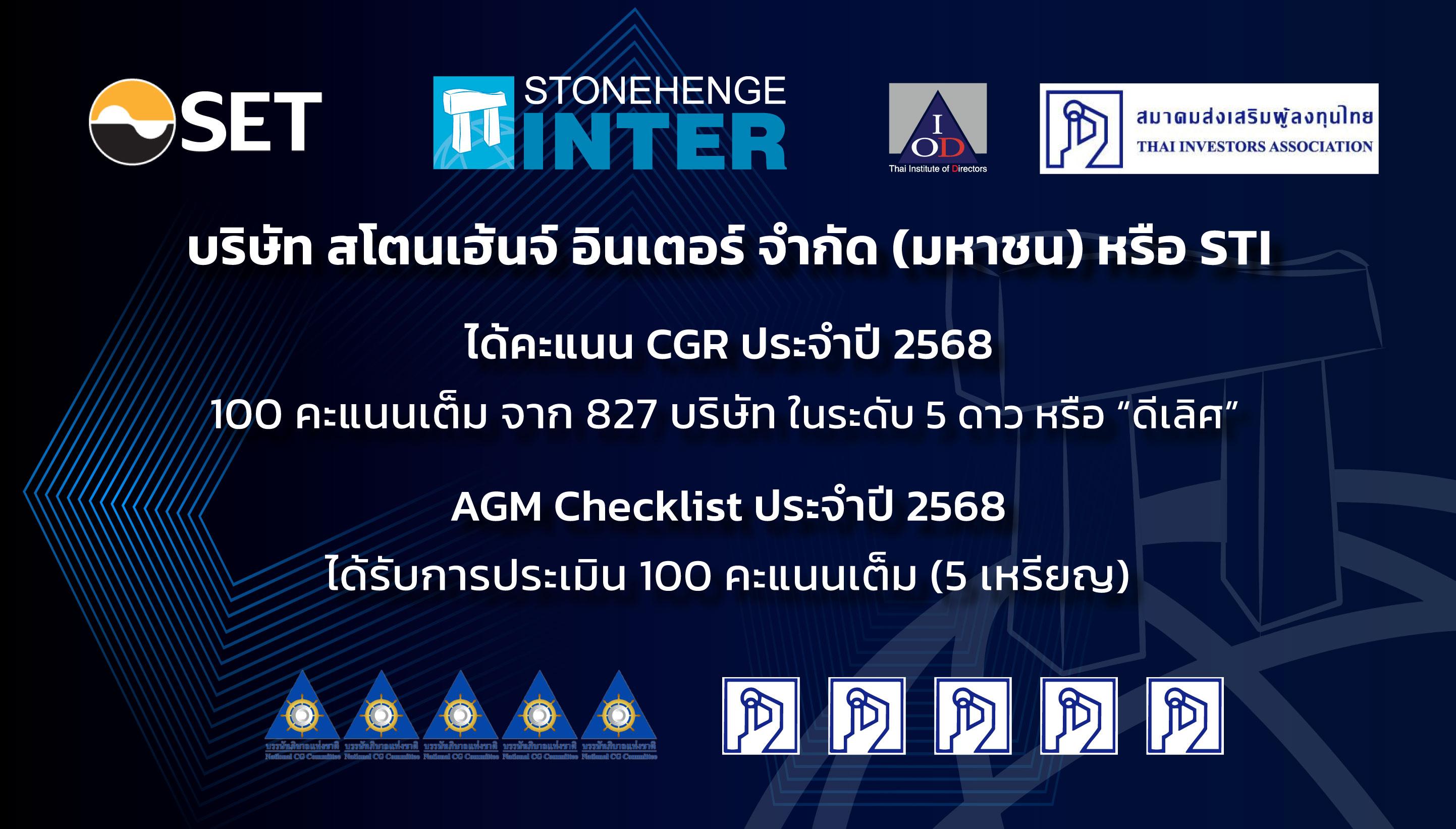
In addition, the company received a perfect score of 100 in the 2025 Annual General Meeting Quality Assessment conducted by the Thai Investors Association, marking the sixth consecutive year of achieving full marks. The company also received a “Excellent” rating in the 2025 CGR assessment by the IOD, which represents the fifth consecutive year of achieving the highest rating. The company’s overall assessment score exceeded the average score of all surveyed listed companies and placed the company in the Top Quartile among listed companies in the Property & Construction sector and among companies with a market capitalization between 1,501–3,000 million baht.