

Sustainability · 2025
In this section51 topics
- Sustainability Policy2 items
- Sustainability Goals & UN SDGs3 items
- Policy Review3 items
- Business Value Chain1 item
- Stakeholder Analysis1 item
- Environmental Policy & Guidelines3 items
- Environmental Policy Review1 item
- Energy — Plan & Guidelines2 items
- Energy — Electricity Consumption1 item
- Energy — Fuel Consumption1 item
- Energy — Targets2 items
- Energy — Performance & Outcomes2 items
- Water — Plan & Guidelines2 items
- Water — Withdrawal, Discharge & Consumption1 item
- Water — Targets2 items
- Water — Performance & Outcomes2 items
- Waste — Plan & Guidelines2 items
- Waste — Generation, Disposal & Recycling1 item
- Waste — Targets2 items
- Waste — Performance & Outcomes2 items
- GHG — Plan & Guidelines2 items
- GHG — Emissions1 item
- GHG — Emissions Verification1 item
- GHG — Principles & Standards1 item
- GHG — Targets1 item
- GHG Targets — Other Targets1 item
- GHG — Performance & Outcomes2 items
- Environmental Legal Incidents1 item
- Other Environmental Management1 item
- Social Policy & Guidelines4 items
- Social Policy Review2 items
- Social — Principles & Standards Practised1 item
- Human Rights Due Diligence2 items
- Employees — Plan & Guidelines3 items
- Employees — Workforce1 item
- Employees — Remuneration & Provident Fund1 item
- Employees — Training & Development2 items
- Employees — Occupational Health & Safety1 item
- Employees — Labour Relations1 item
- Employees — Employee Representation2 items
- Employees — Targets2 items
- Employees — Performance & Outcomes2 items
- Customers — Plan & Guidelines3 items
- Customers — Satisfaction Results1 item
- Customers — Targets2 items
- Customers — Performance & Outcomes2 items
- Community & Social — Plan & Guidelines3 items
- Community & Social — Targets1 item
- Community & Social — Performance & Outcomes2 items
- Other Social Management1 item
- Law Violation Incidents1 item
Sustainability Policy
Has a Sustainability Policy
Yes
Policy Description
Stonehenge Inter Public Company Limited recognizes the importance of conducting business sustainably and responsibly toward society and the environment. The Company has therefore established a Sustainability Management Policy covering environmental, social, and governance aspects, aligned with its vision: “Enhancing construction management and supervision standards for better and sustainable urban quality.” Sustainability development serves as a fundamental pillar that strengthens the Company’s long-term stability and growth. Accordingly, the Company is committed to operating responsibly across all three ESG dimensions environmental, social, and economic/governance to deliver high-quality services and create value for all stakeholders.
Sustainability Goals & UN SDGs
Has Sustainability Goals
Yes
Goals Description
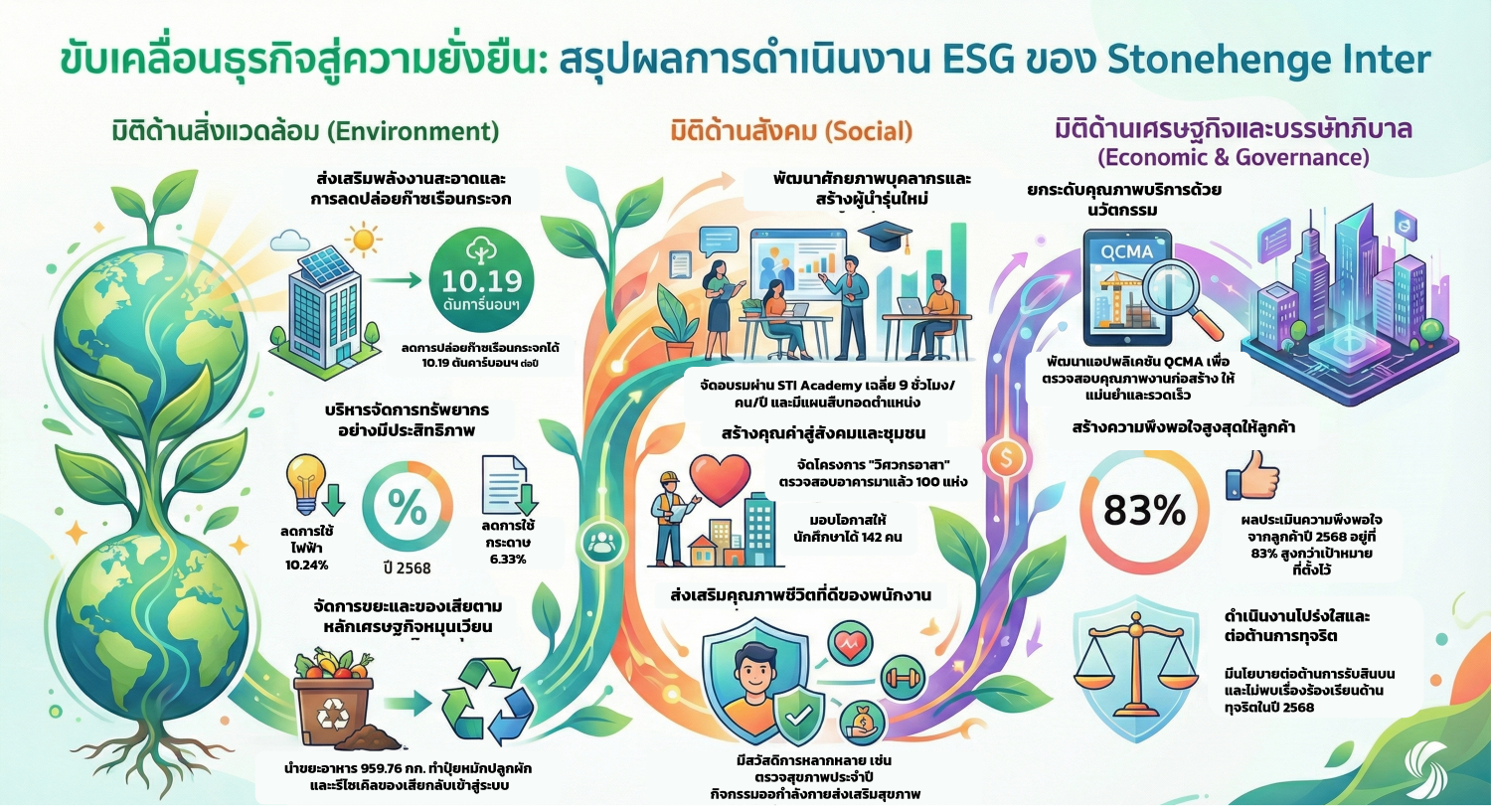
The Company has established sustainability management targets covering key issues under its sustainability strategy and implementation guidelines as follows.
Issue | Target |
Environment Resource Management in Operational Processes
|
|
Issue | Target |
Society Respect for Human Rights
Occupational Health, Safety, and Environmental Management
|
|
Issue | Target |
Economic & Governance Service Quality Management
|
|
Sustainability Strategy
Environmental Sustainability
The Company is committed to operating its business in accordance with environmental conservation principles by prioritizing efficient energy management and adaptation to climate change. This includes reducing the intensity of both direct (GHG Scope 1) and indirect (GHG Scope 2) greenhouse gas emissions, as well as managing resources within work processes responsibly to ensure efficient resource utilization and proper waste disposal in line with sustainable development principles.
Social Sustainability
The Company manages its human resources with care, respect, and equality, while promoting work–life balance. Employee capabilities are strengthened through continuous learning and professional skill development, including support for all professionals to undergo career advancement examinations to become specialized experts. The Company ensures fair employment practices and compensation, provides clear career paths to retain talent in the long term, and offers statutory benefits along with additional welfare programs to enhance employee well-being. Economic and Governance Sustainability
The Company strives to enhance its service quality in accordance with ISO 9001:2015 international standards, generate revenue from diverse construction management projects, and ensure that more than 90% of employees possess engineering professional qualifications recognized within the industry by 2027. The Company also manages supply-chain relationships to effectively meet customer needs.
Innovation and Digital Technology Advancement:
The Company develops modern information technology systems and artificial intelligence solutions, aiming for more than 90% of employees to be proficient in digital technologies by 2027.
Information Security and Personal Data Protection:
The Company maintains information security standards equivalent to or exceeding those of peer industries and continues to enhance cybersecurity and data privacy to safeguard the business value chain.
Continuous Learning and Knowledge Development:
The Company enhances learning and expands new knowledge to improve work efficiency and deliver maximum customer satisfaction, including the application of AI to support faster and more efficient work processes.
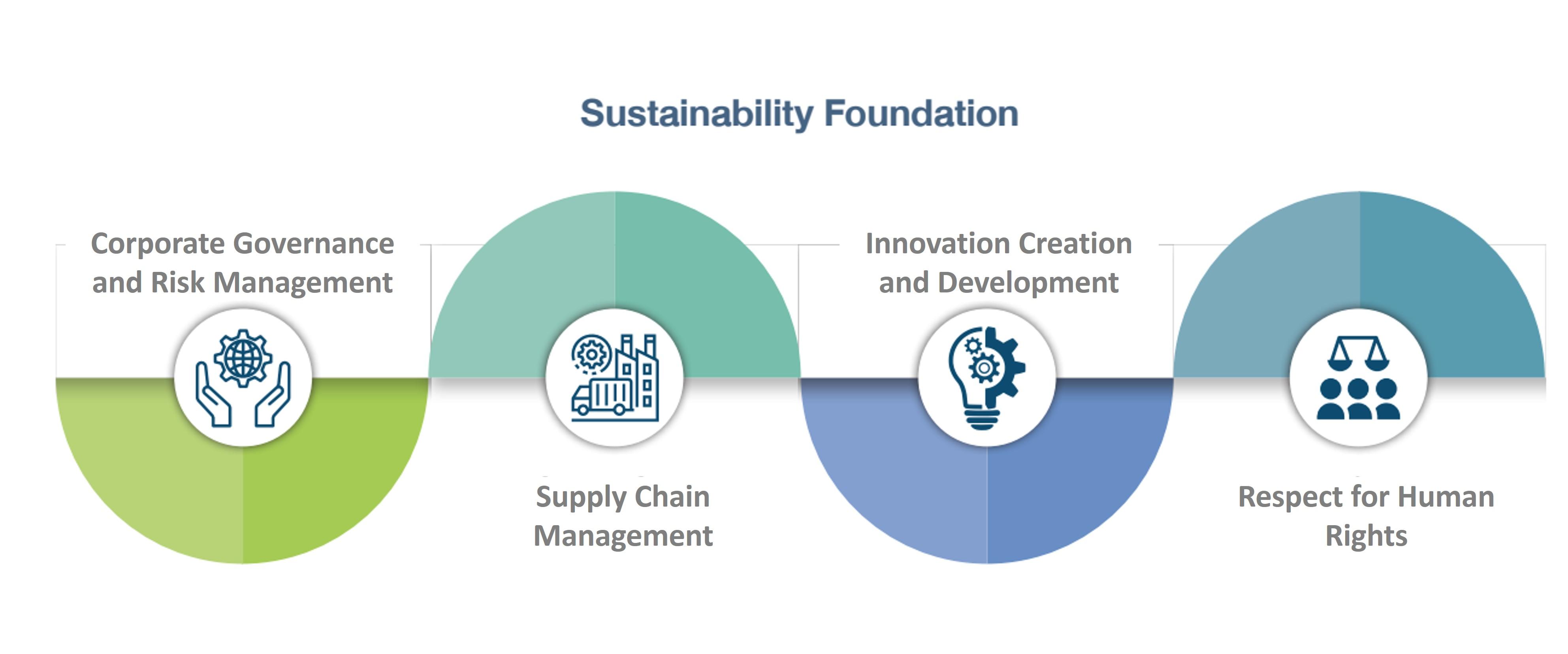
UN Sustainable Development Goals
| SDG Goal |
|---|
| Goal 1 No Poverty |
| Goal 3 Good Health and Well-being |
| Goal 4 Quality Education |
| Goal 5 Gender Equality |
| Goal 7 Affordable and Clean Energy |
| Goal 8 Decent Work and Economic Growth |
| Goal 9 Industry, Innovation and Infrastructure |
| Goal 10 Reduce Inequalities |
| Goal 11 Sustainable Cities and Communities |
| Goal 12 Responsible Consumption and Production |
| Goal 13 Climate Action |
| Goal 15 Life on Land |
| Goal 16 Peace, Justice and Strong Institutions |
| Goal 17 Partnerships for the Goals |
Policy Review
Policy Reviewed This Year
Yes
Policy Changed This Year
No
Review Details
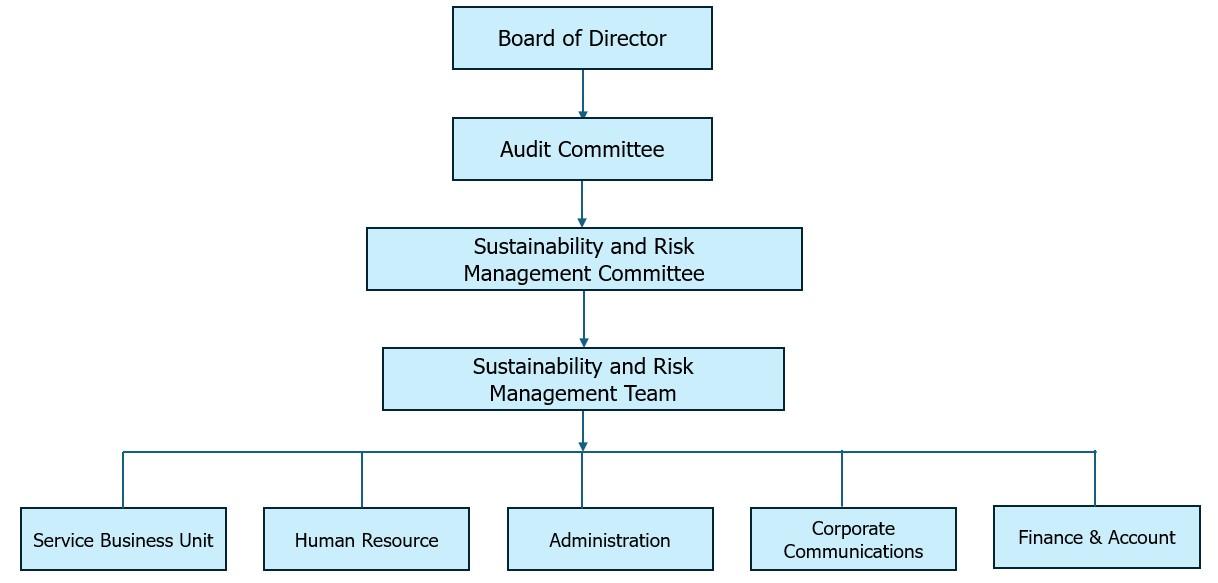
Sustainability Governance Structure
At the Board of Directors Meeting No. 4/2567-68 held on 13 August 2025, the Board approved the revision of the Company’s Sustainability Management Policy, covering environmental, social, and governance (ESG) dimensions. The policy has been communicated through the Company’s website and internal communication system (intranet). In addition, all directors, executives, and employees across the Group are required to study the policy, acknowledge it in writing, and adhere to it strictly. To ensure effective sustainability management, the Board has assigned the Sustainability and Risk Management Committee to oversee sustainability initiatives in parallel with risk management. Furthermore, a Sustainability and Risk Management Working Group, comprising executives and representatives from various departments, supports the committees by collaboratively planning, managing, and driving implementation in alignment with the policies and strategies established by the Board.
Business Value Chain
Value Chain Description
The Company operates as a project management and construction management consulting engineer and provides architectural and engineering design services under the vision “Enhancing the standards of construction management and design with international technologies, delivered by professional teams for better and sustainable urban quality.”
Accordingly, the Company places great importance on stakeholders throughout the business value chain. The Company has analyzed its value chain to understand the relationships among key stakeholders involved in business activities and is committed to creating value in its services to meet the expectations of all stakeholder groups. Sustainability considerations across the three dimensions—Environmental, Social, and Economic & Governance—are integrated into all operational processes. The key management approaches are as follows:
Establish international standards for construction management, supervision, and design, ensuring compliance with professional ethics and legal requirements. The Company also emphasizes environmentally friendly project designs (green buildings) that meet customer expectations.
Uphold business ethics, ensuring transparency and accountability, implementing anti-corruption procedures, and complying with regulations, rules, and laws with a sense of social responsibility.
Treat employees fairly, respect human rights, and foster a positive and safe working environment.
Ensure fair and environmentally friendly procurement, focus on resource efficiency, reduce waste and hazardous materials, and aim to minimize greenhouse gas emissions.
Consider community and environmental impacts throughout all work processes.
Primary Activities in the Business Value Chain
Main Activities | Pre-Construction | For Construction | Post Con | Post-Construction Services (After Completion) |
Stakeholders |
|
|
|
|
Primary Activities in the Value Chain | |
Nature of work | Supervise construction work in accordance with professional standards and ethics, and design project works that meet client requirements, comply with legal regulations, and are environmentally friendly. |
Management of Factors in Construction Management and Supervision Operations | 1.Coordinate with the project owner (private sector/government agencies) to obtain project details or the scope of work as specified in the TOR. 2.Select personnel in accordance with the TOR requirements to qualify for the project. 3.Submit the proposal to the project owner or participate in the bidding process as required. 4.Present details regarding the work plan and service fees. 5.Sign the service contract with the project owner. 6.Select qualified partners (contractors) that meet the client’s requirements and pass the vendor selection criteria |
Operation Management | 1.Conduct a project kick-off meeting with designers, contractors, and environmental specialists (if applicable). 2.Supervise and manage construction and design work in accordance with professional standards, ensuring quality that aligns with the approved budget and timeline. 3.Oversee contractor performance and provide recommendations on selecting environmentally friendly products and energy-efficient equipment. 4.Provide clients with regular progress reports and proactively resolve issues. 5.Develop innovations to enhance work processes for higher accuracy, reduced errors, and integrate artificial intelligence to support operations. 6.Prioritize safety and consider impacts on neighboring communities throughout the construction period. |
Quality Control & Project Delivery | 1.Inspect work quality to ensure compliance with standards and conduct performance evaluations. 2.Conduct safety assessments for the project and evaluate environmental impacts. 3.Apply innovative inspection tools to address defects accurately and promptly. 4.Deliver the project on schedule and provide consultation and/or service-related recommendations. 5.Provide quality assurance to ensure client confidence. 6.Conduct customer satisfaction evaluations and use feedback to improve service quality. |
After-sales Service | 1.Monitor progress and identify issues in order to jointly resolve problems for the client. 2.Provide consultation and present the company’s new services to support ongoing engagement and create continuous business opportunities. |
Supporting Activities | |
Human Resource |
|
Information Technology Management |
|
Accounting and Financial Management |
|
Legal administration Management |
|
Marketing and Communication |
|
Stakeholder Analysis
Stakeholder Analysis
| Stakeholder Type | Stakeholders | Stakeholder Expectations | Response to Expectations | Communication Activities |
|---|---|---|---|---|
| Internal stakeholders | 2921 · Description: Employees | • Appropriate and fair compensation and benefits
• Capability development aligned with the company’s strategic direction
• Career advancement for improved well-being
• A safe and healthy working environment that supports effective performance
• Equal rights and opportunities for all employees | • Establish fair and appropriate criteria for compensation and benefits
• Implement personnel development plans, including training and seminars, to enhance employee capabilities and support career advancement
• Provide a mentoring system to transfer organizational culture and work knowledge from senior to junior employees
• Offer a variety of welfare programs and facilities for employees
• Organize team meals and internal gatherings to promote good relationships among employees
• Implement effective safety, occupational health, and environmental management
• Provide channels for employees to share feedback and submit complaints as specified by the company | 2941 · Description: Online Communication · 2942 · Description: Internal Meeting · 2945 · Description: Complaint Reception · 2946 · Description: Employee Engagement Survey · 2948 · Description: Training / Seminar · 2949 · Other name: Employee engagement activities / Training and seminars / Employee visit activities by the Human Resources Department to gather feedback · Description: Others |
| External stakeholders | 2913 · Description: Shareholders | • Sustainable business growth
• Consistent returns
• Good corporate governance with transparent and reliable operations
• Equal access to information
• Management based on principles of good governance, transparency, accountability, effective risk management, and preventive measures | • Maintain stable growth by reviewing business strategies and setting clear goals that align with changing economic conditions
• Continuously enhance service quality by adopting digital technologies to support operations, create differentiation, and gain competitive advantages
• Expand a comprehensive service portfolio to build diverse expertise
• Operate with good governance, focusing on sustainable profitability and prudent financial management
• Determine dividend payments at not less than 50% as specified in the policy
• Communicate operating results regularly across all channels, ensuring full and timely disclosure of material information | 2945 · Description: Complaint Reception · 2949 · Other name: Shareholders’ meetings / Performance announcement events such as analyst meetings / Investor meetings, including SET Opportunity Day / Investor relations website, email: ir@sti.co.th , and contact number · Description: Others |
| External stakeholders | 2923 · Description: Customers | • Reasonable and fair service fees
• High-quality work that meets international standards, adheres to professional ethics, and is delivered within the agreed timeline and budget
• Ability to provide professional advice and guidance to support clients in making well-informed decisions
• Efficient project management with thoughtful and timely problem-solving to minimize potential impacts
• Strong management of safety and occupational health in construction projects, along with measures to control environmental impacts
• Commitment to safeguarding client confidentiality | • Set reasonable and fair prices
• Develop personnel professionally and continuously improve innovations and technologies to support operations
• Assign personnel with qualifications suitable for each project
• Conduct customer satisfaction surveys with a target of over 80%, and use feedback to enhance service quality
• Provide expert personnel to advise clients
• Perform quality inspections before delivery and utilize the QCMA application to reduce inspection errors
• Operate in accordance with personal data protection policies and strictly maintain client confidentiality
• Comply with environmental laws and establish safety measure guidelines for projects
• Maintain honesty to build client trust and confidence in the company’s operations
• Enhance work processes for maximum efficiency by integrating innovations and delivering work that meets client requirements
• Strictly and fairly comply with contractual terms and conditions
• Operate under an anti-corruption policy | 2938 · Description: Visit · 2941 · Description: Online Communication · 2945 · Description: Complaint Reception · 2947 · Description: Satisfaction Survey · 2949 · Other name: Customer relations activities · Description: Others |
| External stakeholders | 2899 · Description: Suppliers · 2900 · Description: Business partners | • Grow together
• Conduct operations with transparency and fairness
• Strictly comply with contractual agreements
• Make full payment for goods/services within the agreed timeframe
• Maintain a clear, fair, transparent, and auditable procurement process | • Maintain transparent and auditable procurement standards
• Establish clear and fair hiring requirements, and strictly comply with agreed contracts and/or conditions
• Uphold business ethics and treat all partners equally
• Make payments for goods and services as specified in the contract
• Prioritize building and maintaining long-term, sustainable relationships with partners
• Operate under an anti-corruption policy | 2941 · Description: Online Communication · 2945 · Description: Complaint Reception · 2949 · Other name: Consultation and brainstorming meetings to improve work efficiency / Activities to strengthen relationships with key partners · Description: Others |
| External stakeholders | 2898 · Description: Competitors | • Treat competitors lawfully and ethically
• Refrain from damaging competitors’ reputations through defamatory statements
• Do not seek confidential information from competitors through dishonest means
• Create opportunities for collaboration in appropriate areas | • Treat competitors lawfully and ethically
• Refrain from damaging competitors’ reputations through defamatory statements
• Do not seek confidential information from competitors through dishonest means
• Create opportunities for collaboration in appropriate areas | 2941 · Description: Online Communication · 2945 · Description: Complaint Reception · 2948 · Description: Training / Seminar |
| External stakeholders | 2902 · Description: Community · 2928 · Description: Society | • Manage operational safety to minimize impacts on the community and society
• Support and promote activities that benefit the community and society as a whole
• Participate in strengthening and sustainably developing the community
• Listen to concerns and take prompt action to resolve issues arising from operations | • Establish a systematic safety management system and conduct regular safety inspections
• Assess community needs or impacts and provide immediate assistance
• Build good relationships between the community and the organization
• Carry out activities that contribute to community development, support, and promotion through various projects to foster sustainable growth | 2941 · Description: Online Communication · 2945 · Description: Complaint Reception · 2949 · Other name: Engage in discussions, exchange ideas, and participate in activities with the community · Description: Others |
| External stakeholders | 2931 · Description: Government agencies and Regulators | • Conduct business in accordance with good governance principles, complying with applicable laws, regulations, and requirements set by regulatory authorities
• Support and collaborate in advancing government policies and goals, such as climate change initiatives | • Comply fully with all applicable laws, regulations, and relevant rules
• Conduct business responsibly and fairly toward all stakeholder groups
• Disclose information transparently and reliably
• Create opportunities for collaboration with various organizations to support sustainable business operations | 2949 · Other name: reporting business performance and operational results in accordance with regulatory requirements / Meetings or coordination between executives and relevant departments / Conferences, seminars, and discussions with government agencies and regulators / Communicating information via phone, email, meetings, letters, and other channels · Description: Others |
| External stakeholders | 2894 · Description: Creditor | Financial stability, including debt levels and debt-servicing capability
Transparency in business operations | Timely debt repayment
Risk management and adherence to business ethics | 2941 · Description: Online Communication · 2943 · Description: External Meeting · 2945 · Description: Complaint Reception |
Environmental Policy & Guidelines
Has an Environmental Policy
Yes
Policy Description
Environmental Policies and Practices
The Company recognizes that effective environmental management not only helps reduce legal and reputational risks but also minimizes environmental impacts that may occur to stakeholders throughout the value chain. The Company is committed to environmental operations under its comprehensive Sustainability Management Policy, which sets relevant guidelines to mitigate environmental impacts in all dimensions of business operations. In doing so, the Company adheres to responsible business practices aligned with professional standards to ensure sustainable business growth while protecting the environment and society.
Key Operational Guidelines
Efficient Use of Resources and Energy
The Company plans and controls energy consumption to enhance efficiency, reduce greenhouse gas emissions, and promote the use of clean energy. Technology and innovation are integrated to support work processes and foster environmentally friendly operations, including encouraging energy conservation within office facilities.
Water Management
The Company implements measures to reduce water consumption and improve water usage efficiency across all activities, ensuring optimal utilization of this essential resource.
Waste Management and Circular Economy Promotion
The Company manages waste efficiently and maximizes resource utilization to support circular economy principles and sustainable development. Waste is segregated into hazardous and general waste categories in accordance with legal requirements. Employees are also encouraged to reuse materials and recycle suitable waste, while waste storage, transportation, and disposal follow proper sanitation and regulatory standards to ensure efficient resource use, minimize environmental impacts, and create long-term value.
Conservation of Natural Resources and Biodiversity
The Company supports the protection and preservation of ecosystems relevant to its business operations.
Monitoring and Improving Environmental Performance
Environmental performance is continuously monitored, evaluated, and improved to align with the Company’s environmental objectives.
Governance and Internal Communication
The Company reviews its sustainability management policy annually. The policy was reviewed and approved by the Board of Directors at Meeting No. 4/2024–25 on August 13, 2025, and remains consistent with the previous year’s policy. The Company has published the policy on its website and intranet in both podcast format and downloadable documents to ensure that all directors, executives, and employees (100%) can study, understand, acknowledge, and strictly comply with it. In addition, internal communications are conducted to raise employee awareness of energy efficiency improvements, thereby promoting a sense of social and environmental responsibility within the organization.
Additionally, the Company has sought cooperation from its partners and contractors in implementing environmental management measures at construction sites in accordance with the safety guidelines and practices specified in the Company’s construction project manual, in its role as the construction management and supervision consultant. The Company has also instilled a sense of social and environmental responsibility among employees through internal campaigns and communications, promoting the mindful and sustainable use of resources.
Environmental Guidelines
| Guideline |
|---|
| Electricity Management |
| Fuel Management |
| Renewable/Clean Energy Management |
| Water Management |
| Waste Management |
| Biodiversity Management |
| Greenhouse Gas and Climate Change Management |
| Air Quality Management |
| Noise Pollution Management |
Environmental Policy Review
Policy Reviewed This Year
No
Energy — Plan & Guidelines
Has an Energy Management Plan
Yes
Plan Description
Energy Management Plan
The Company has established sustainable growth as a key business objective, focusing on responsible and efficient energy consumption. The Company has therefore developed an energy management plan to optimize fuel and electricity usage by promoting clean energy and adopting new technologies to help reduce the organization’s greenhouse gas emissions. Energy consumption is continuously monitored to refine management approaches, while employees are encouraged to participate in energy-saving initiatives to help reduce environmental impacts and global warming—one of the primary causes of climate change that affects the environment and surrounding communities in the long term.
Energy management is also essential to the Company’s role as a construction management and supervision consultant, supporting cost control and operational efficiency, as well as advancing sustainable project development. This includes assisting clients in developing environmentally friendly projects such as green buildings and renewable energy solutions, and promoting the systematic use of energy-efficient technologies.
Energy Management Working Group
To implement effective energy management, the Company has appointed a Sustainability and Risk Management Working Group to ensure that energy management efforts are continuous and efficient. The working group is responsible for implementing energy management initiatives in alignment with corporate policies and coordinating with relevant departments to secure cooperation in following the Company’s guidelines. Various training programs and activities are organized to promote energy conservation awareness among employees at all levels.
Fuel Consumption
The Company recognizes the environmental impacts associated with fuel-powered vehicles, which are a contributing source of greenhouse gas emissions and global warming. Therefore, the Company manages business travel and vehicle usage efficiently to optimize fuel consumption. In addition, the Company plans to promote and support the use of Electric Vehicles (EVs) to replace internal combustion engine vehicles in order to reduce carbon emissions and environmental impacts, in alignment with the Company’s sustainable business practices.
Electricity Usage
Electricity systems are maintained regularly to ensure efficiency. The Company has switched fully to LED lighting in all office areas and encourages employees to turn off lights and air-conditioning when not needed. Energy usage is tracked continuously to reduce unnecessary consumption and greenhouse gas emissions.
Renewable Energy Usage
The Company recognizes the value of utilizing clean energy by generating electricity from solar power to maximize its benefits. Solar panels with a maximum capacity of 19.80 kilowatts (KWP) have been installed on the rooftop of the Company’s training center. The production of clean energy depends on weather conditions and the availability of sunlight as variable factors.
The Company aims to use clean energy to help reduce electricity expenses from the Metropolitan Electricity Authority and to contribute to the reduction of greenhouse gas emissions. The clean energy generated supports electricity consumption for training activities, employee skill development throughout the year, as well as for office operations within the training center building.
Furthermore, the Company plans to expand its renewable energy capacity by installing additional solar panels. This plan is currently under consideration as the Company’s office building is located on leased premises, which requires approval from the property owner before implementation.
Energy — Electricity Consumption
Electricity Consumption
| Metric | Current Year | Previous Year | Two Years Ago |
|---|---|---|---|
| Total electricity consumption within the organization (Kilowatt-Hours) | 359,309 | 408,507.6 | 363,519 |
| Electricity purchased for consumption from non-renewable energy sources (Kilowatt-Hours) | 341,293 | 400,302 | 363,519 |
| Electricity purchased or generated for consumption from renewable energy sources (Kilowatt-Hours) | 18,016 | 8,205.6 |
Energy — Fuel Consumption
Fuel Consumption
| Metric | Current Year | Previous Year | Two Years Ago |
|---|---|---|---|
| Crude oil (Barrels) | |||
| Coal (Metric tonnes) | |||
| Jet fuel (Litres) | |||
| Diesel (Litres) | 5,179.41 | 0 | 0 |
| Gasoline (Litres) | 15,966.34 | 0 | 0 |
| Fuel oil (Litres) | |||
| Natural gas (Standard cubic feet) | |||
| LPG (Kilograms) | |||
| Steam (Metric tonnes) |
Energy — Targets
Has Set Targets
Yes
Targets
| Target | Base Year | Base Year Value | Target Year | Target Year Value | Target Change (%) | Unit |
|---|---|---|---|---|---|---|
| Reduction of electricity purchased for consumption | 2,024 | 400,302 | 2,025 | 4,000 | 1 | Kilowatt-hour |
Energy — Performance & Outcomes
Has Performance Results
Yes
Performance Description
Energy Management Performance
Fuel Energy Management The Company requires executives and employees to use fuel responsibly and efficiently. Travel for off-site duties is planned effectively, with an emphasis on utilizing environmentally friendly fuel sources. The Company also aims to introduce Electric Vehicles (EVs) for executives as a means to conserve fuel and reduce environmental impacts, including lowering greenhouse gas emissions, air pollution, and noise, as well as reducing reliance on fossil fuels. This initiative also reflects the Company’s commitment to sustainable business operations in alignment with ESG principles. The Company began collecting fuel usage data for greenhouse gas calculation in 2025 for the first time and plans to expand data coverage in the following years.
Electricity Management Projects
LED Lighting Replacement Project The Company inspected and replaced all office lighting with energy-efficient LED bulbs, achieving 100% completion across all office areas.
Air-Conditioning Maintenance Project The Company conducts regular air-conditioning maintenance to ensure efficient performance, reduce the risk of breakdowns, and save electricity. Older units are gradually replaced with energy-saving models. In 2025, two new energy-efficient air-conditioning units were installed, and the Company plans to continue periodic performance assessments to support long-term energy conservation.
Energy-Saving Campaign The Company places strong emphasis on energy conservation through efficient electricity usage. Awareness materials and internal communication campaigns are implemented to encourage employees to turn on lights only where necessary and to switch off lights and all electrical equipment when not in use or during lunch breaks. In addition, employees are encouraged to turn off air-conditioning units at least 30 minutes before the end of each workday. These efforts aim to reduce electricity consumption, lower greenhouse gas emissions, and help mitigate global warming in a sustainable manner.
Renewable Energy Promotion Project In 2025, the Company generated 18,016 kWh of electricity from the solar power system installed at the Training Center building, resulting in a reduction of 10.19 tons of CO2 equivalent per year, or the environmental benefit comparable to saving 745 trees.
The Company also plans to install additional solar panels at the office building to increase the proportion of clean, renewable energy use and reduce reliance on external electricity sources. This initiative aims to further decrease greenhouse gas emissions. The project is currently under feasibility assessment, as the office is located on leased property and requires approval from the property owner.
The Company is also planning efficient management of solar-generated renewable energy, including installing storage and distribution equipment to ensure maximum utilization across different departments, enhancing both organizational benefits and environmental conservation.
The Company has set a target to reduce electricity consumption by 1% from the 2024 baseline. In 2025, the Company successfully achieved its planned initiatives, resulting in a total accumulated electricity usage both purchased and generated from clean energy of 359,309 kWh, representing a 10.24% reduction from the baseline year (2024).
Water — Plan & Guidelines
Has a Water Management Plan
Yes
Plan Description
Water Management Plan
The Company recognizes the importance of water resources and promotes efficient water use. Awareness campaigns encourage employees to use water responsibly, check water taps after use to reduce water loss , and ensure proper wastewater discharge according to legal standards. In its role as a construction management consultant, the Company emphasizes designing and monitoring effective water and wastewater systems in construction projects to reduce environmental and community impacts.
Water consumption in 2025 decreased by 1.60% from the baseline year.
Water — Withdrawal, Discharge & Consumption
Water Withdrawal, Discharge & Consumption
| Metric | Current Year | Previous Year | Two Years Ago |
|---|---|---|---|
| Total water withdrawal (Cubic meters) | 3,251 | 3,304 | 2,628 |
| Total water withdrawal by third-party water (Cubic meters) | |||
| Total water withdrawal by surface water (Cubic meters) | |||
| Total water withdrawal by groundwater (Cubic meters) | |||
| Total water withdrawal by seawater (Cubic meters) | |||
| Total water withdrawal by produced water (Cubic meters) | |||
| Percentage of wastewater treated before discharge (%) | 0 | 0 | 0 |
| Total water discharge (Cubic meters) | |||
| Total water discharge to third-party water (Cubic meters) | |||
| Total water discharge to surface water (Cubic meters) | |||
| Total water discharge to groundwater (Cubic meters) | |||
| Total water discharge to seawater (Cubic meters) | |||
| Total water consumption (Cubic meters) | 3,251 | 3,304 | 2,628 |
| Recycled water (Cubic meters) | 0 | 0 | 0 |
Water — Targets
Has Set Targets
Yes
Targets
| Target | Base Year | Base Year Value | Target Year | Target Year Value | Target Change (%) | Unit |
|---|---|---|---|---|---|---|
| Reduction of water withdrawal | 2,024 | 3,304 | 2,025 | 33 | 1 | Cubic meters |
Water — Performance & Outcomes
Has Performance Results
Yes
Performance Description
Water Management Performance
Given that most of the Company’s workforce is stationed at construction sites, water management within office facilities focuses on reducing consumption through awareness campaigns, encouraging employees to use water responsibly, and ensuring proper closure of taps after use. Water saving fixtures, such as automatic shut off faucets, have been installed to prevent unnecessary water discharge. Routine inspections and maintenance of water pipelines are conducted to prevent leaks and ensure system integrity.
In 2025, the Company achieved its target of reducing municipal water consumption by 1% from the 2024 baseline, with total consumption of 3,251 cubic meter representing a 1.60% reduction year over year. As a construction management and supervision consultant, the Company also collaborates with contractors to promote responsible water use at construction sites and ensure proper handling and discharge of wastewater to minimize impacts on surrounding communities.
Waste — Plan & Guidelines
Has a Waste Management Plan
Yes
Plan Description
Waste and Waste Management Plan
The Company places great importance on the management of waste generated from its business operations, which may impact society and the environment. The Company has established operational strategies based on the 3R principles Reduce, Reuse, and Recycle and implements systematic waste segregation by type to ensure proper and hygienic disposal. Effective waste management helps reduce operating costs and supports sustainability practices, such as minimizing paper usage in reporting processes, recycling paper documents, and improving overall resource efficiency. The Company also conducts awareness campaigns to educate employees on proper waste disposal methods, reinforcing its commitment to environmentally responsible operations. The Company’s waste management framework emphasizes reducing waste generation, minimizing disposal through landfills, promoting recycling, and enforcing waste segregation at the source. This includes providing separate waste bins by category, monitoring office waste volumes, and collaborating with the Corporate Communications Department to encourage employees at all levels to participate in reducing and segregating waste in accordance with environmental standards prescribed by government agencies.
Operational Guidelines
General Waste
Select durable, high-quality materials and office supplies that can be recycled, such as paper and office equipment.
Develop paperless workflows to reduce waste generation.
Improve waste disposal processes to maximize material recovery and minimize landfill waste.
Hazardous Waste
The Company provides clearly separated hazardous waste bins and ensures that all hazardous waste is disposed of by licensed and legally compliant waste management operators.
Organic/Biodegradable Waste
The Company prioritizes proper and environmentally friendly waste management by separating organic waste—such as food scraps, vegetable and fruit waste, leaves, and other biodegradable materials. Organic waste is converted into compost or repurposed for other beneficial uses, helping reduce waste requiring disposal and promoting efficient and sustainable resource use.
Collaboration and Stakeholder Engagement
Beyond internal campaigns and waste management practices, the Company also collaborates with construction project partners. As a construction management and supervision consultant, the Company promotes environmental responsibility across project sites, supporting measures to minimize environmental impacts on surrounding communities and establishing project-level guidelines and practices for environmental impact reduction.
Waste — Generation, Disposal & Recycling
Waste Generation, Disposal & Recycling
| Metric | Current Year | Previous Year | Two Years Ago |
|---|---|---|---|
| Total waste generated (Kilograms) | 1,463.59 | 0 | 0 |
| Non-hazardous waste (Kilograms) | 1,463.59 | 0 | 0 |
| Non-hazardous waste - Landfilling (Kilograms) | |||
| Non-hazardous waste - Incineration (with energy recovery) (Kilograms) | |||
| Non-hazardous waste - Incineration (without energy recovery) (Kilograms) | |||
| Non-hazardous waste - Other disposal operations (Kilograms) | 1,463.59 | 0 | 0 |
| Hazardous waste (Kilograms) | 0 | 0 | 0 |
| Hazardous waste - Landfilling (Kilograms) | |||
| Hazardous waste - Incineration (with energy recovery) (Kilograms) | |||
| Hazardous waste - Incineration (without energy recovery) (Kilograms) | |||
| Hazardous waste - Other disposal operations (Kilograms) | |||
| Total reused/recycled waste (Kilograms) | 569.76 | 0 | 0 |
| Reused/Recycled non-hazardous waste (Kilograms) | 46 | 0 | 0 |
| Reused non-hazardous waste (Kilograms) | 0 | 0 | |
| Recycled non-hazardous waste (Kilograms) | 46 | 0 | 0 |
| Reused/Recycled hazardous waste (Kilograms) | 523.76 | 0 | 0 |
| Reused hazardous waste (Kilograms) | 0 | 0 | |
| Recycled hazardous waste (Kilograms) | 523.76 | 0 | 0 |
Waste — Targets
Has Set Targets
Yes
Targets
| Waste Type | Disposal Approach | Target | Target Year | Target Change (%) | Unit |
|---|---|---|---|---|---|
| Non-hazardous waste | 2763 · Other name: Segregate waste by category—such as plastic waste, glass bottles, organic waste, and electronic waste—separately from general refuse in accordance with the requirements of the district public health authority. The company will record the quantities of each waste type in the Climate Care system, beginning with the 2026 fiscal year as the first year of data collection. This information will be used for management and planning, ensuring proper waste collection and efficient waste management. The 20 · Description: Other | Reduce waste volume | 2,027 | 1 | Kilograms |
Waste — Performance & Outcomes
Has Performance Results
Yes
Performance Description
Waste and Residual Materials Management Performance
Waste Reduction and Landfill Diversion
The Company implements a paperless work approach to reduce paper consumption and minimize residual waste. Key business processes have transitioned to digital formats, including document storage and email distribution for Board meeting materials, annual Board performance evaluations, quarterly employee performance assessments, monthly departmental meetings, virtual Annual General Meetings (AGM), and shareholder meeting documents delivered via QR Code. A centralized digital document management system is used across all projects through a workflow platform covering finance, accounting, and procurement functions. This system reduces paper usage, supports internal control, and promotes the reuse of paper in alignment with the 3Rs principle (Reduce, Reuse, Recycle). Recyclable materials are segregated and sent to certified recycling facilities to minimize waste sent to landfills.
In 2025, the Company participated in the “Care the Bear” initiative, part of the SET’s Climate Care Program, by organizing the Annual General Meeting of Shareholders and distributing the meeting invitation and related documents in QR Code format. This collaboration was carried out with Thailand Securities Depository Co., Ltd. (TSD), the registrar. The initiative resulted in a total reduction of 53.35 tons of carbon dioxide equivalent, corresponding to the carbon absorption capacity of 5,616 trees per year.
The Company also uses Green Label-certified paper, produced through environmentally friendly processes, to support climate change mitigation. Paper waste is managed in two streams:
Expired documents are collected and delivered to Datasafe Co., Ltd. for secure disposal or appropriate processing.
General paper waste, such as fully used sheets, is shredded and sold to recycling collectors.
Electronic Waste Management
The Company recognizes the value of electronic waste, which can be recycled, repaired, and reused. Therefore, the Company has implemented electronic waste management through the “Tor Term Suk” Project to support the goal of zero-landfill waste. Under this initiative, electronic waste is collected and donated to the Sustainable Mobility Universal Design Association. The project has been carried out for four consecutive years, enabling the Association to repair or resell donated electronic devices to generate income used to purchase essential supplies and wheelchairs for persons with disabilities across Thailand. The program has received consistent participation and support from employees and partners.
Management of Surplus Materials
Since the Company provides uniforms to employees each year, employees are required to return uniforms that are no longer in usable condition for proper handling. The Company therefore implemented a program to upcycle used uniforms by transforming shirts into reusable fabric bags and hats. This initiative also helps support the income of the Disability Career Promotion Center in Nonthaburi Province. The upcycled products are then used as gifts or souvenirs for employee participating in various Company activities.
Hazardous Waste Management
The Company participates in a printer cartridge recycling program with Ricoh (Thailand) Co., Ltd., a supplier that allows customers to return used cartridges for recycling or for manufacturing into new products under the circular economy concept. Cartridges that are no longer usable are disposed of properly in accordance with legal requirements. This initiative supports environmental protection and promotes responsible resource consumption.
In 2025, the Company returned a total of 59 used printer cartridges to Ricoh as part of this program.
Employee Awareness and Participation
The Company implements a waste segregation program for plastic waste and organic waste (food scraps), encouraging employees to reduce plastic use and educating them on proper disposal methods. Dedicated bins are provided for plastic bottles and food waste, and organic waste collected daily is used to produce compost.
In 2025, employees helped separate a total of 959.76 kilograms of food waste for composting. The compost produced is used to grow organic vegetables within the Company premises, contributing to increased green space. The harvested produce from the Company’s health garden is sold to employees, providing fresh and clean vegetables. Revenue from these sales is allocated to housekeeping staff, who play a key role in driving the initiative.
This program fosters employee participation and builds long-term environmental awareness, reinforcing a culture of sustainability across all levels of the organization.
GHG — Plan & Guidelines
Has a GHG Management Plan
Yes
Plan Description
Greenhouse Gas Management Plan
The Company manages greenhouse gas (GHG) emissions in accordance with GRI 305: GHG Emissions, covering Scope 1–3 in line with international standards. The Company adopts the Carbon Footprint assessment guidelines of the Thailand Greenhouse Gas Management Organization (Public Organization) and focuses on reducing emissions through efficient energy use, increasing clean energy consumption, digital transformation to reduce paper usage, and proper waste management based on the 3R principles. The Company targets a reduction of energy and resource consumption by at least 1–2% in the short term, while supporting Thailand’s national goal of achieving carbon neutrality by 2050.
GHG Management ApproachGRI 305-1 Direct GHG Emissions (Scope 1)Sources: • Fuel combustion from Company vehiclesReduction Measures:
Optimize route planning and vehicle utilization
Transition to electric or hybrid vehicles (EV/Hybrid) in the medium term (3–5 years)
GRI 305-2 Energy Indirect GHG Emissions (Scope 2)
Sources:
Electricity consumption in office buildings
Renewable energy generated from solar rooftop systems
Reduction Measures:
100% LED lighting installation • Scheduled maintenance of air-conditioning systems
Promotion and expansion of renewable energy usage
Internal energy-saving campaigns and awareness programs
GRI 305-3 Other Indirect GHG Emissions (Scope 3)
Sources:
Municipal water consumption in office areas
Paper usage in business operations
Waste and materials generated through operations (general waste, hazardous waste, organic waste)
Reduction Measures:
Reduced water and paper usage through digital transformation
Reuse of paper on both sides before proper disposal
Promotion of waste segregation and reduced landfill dependency
Office-wide waste reduction and plastic minimization campaigns to lower Scope 3 emissions.
GHG — Emissions
GHG Emissions
| Metric | Current Year | Previous Year | Two Years Ago |
|---|---|---|---|
| Total GHG emissions (Metric tonnes of carbon dioxide equivalent) | 240.29 | 245.7 | 223.29 |
| Total greenhouse gas emissions 1 (Metric tonnes of carbon dioxide equivalent) | 48.83 | 0 | 0 |
| Total greenhouse gas emissions 2 (Metric tonnes of carbon dioxide equivalent) | 180.81 | 239.62 | 217.6 |
| Total greenhouse gas emissions 3 (Metric tonnes of carbon dioxide equivalent) | 10.65 | 6.08 | 5.69 |
GHG — Emissions Verification
Emissions Verified by a Third Party
No
GHG — Principles & Standards
Principles & Standards Applied
| Standard |
|---|
| 2671 |
GHG — Targets
Has Set GHG Targets
Yes
GHG Targets — Other Targets
Other GHG Targets
| Emission Scope | Base Year | Base Year Emissions | Near-term Target Year | Near-term Target Value | Near-term Target Change (%) | Long-term Target Year | Long-term Target Value | Long-term Target Change (%) | Target Year | Target Year Emissions | Target Change (%) | Unit | Per Unit (Intensity) | Per Unit — Please Specify |
|---|---|---|---|---|---|---|---|---|---|---|---|---|---|---|
| 2717 | 2,025 | 48.83 | 2,026 | 5 | 1 | 2,028 | 15 | 3 | 2,026 | 5 | 1 | Metric tonnes of carbon dioxide equivalent | Litre of product | Litre of product |
| 2719 | 2,025 | 10.65 | 2,026 | 2 | 2,028 | 5 | 2,026 | 2 | Metric tonnes of carbon dioxide equivalent | |||||
| 2718 | 2,025 | 180.81 | 2,026 | 1 | 2,028 | 3 | 2,026 | 1 | Metric tonnes of carbon dioxide equivalent |
GHG — Performance & Outcomes
Has Performance Results
Yes
Performance Description
Greenhouse Gas Management Performance
GRI 305-1 Direct GHG Emissions (Scope 1)
Source : Fuel combustion from company vehicles
2025 Performance:
Initiated data collection and calculation of Scope 1 emissions for the first time.
Preparing to expand data coverage to all relevant operational processes in subsequent phases.
GRI 305-2 Energy Indirect GHG Emissions (Scope 2)
Source: Electricity consumption in office operations and renewable energy from solar power
2025 Performance:
Achieved electricity savings of 40,993 kWh under Scope 2.
Increased the proportion of renewable energy generated from rooftop solar panels.
Further details are provided in the section “Energy Management.”
GRI 305-3 Other Indirect GHG Emissions (Scope 3)
2025 Performance:
Reduced water consumption and paper usage as a result of digital transformation initiatives.
Implemented paper reuse on both sides before proper disposal.
Promoted waste segregation to reduce the amount of waste requiring disposal or landfill.
Implemented internal plastic reduction and waste-separation programs to further reduce Scope 3 emissions.
| Electricity Consumption (kWh) | Water Consumption (cubic meter) | Paper Consumption (kg) |
2024 (Base Year) | 400,302 | 3,304 | 12,895.71 |
2025 | 359,309 | 3,251 | 12,078.99 |
Increase/Decrease (%) | Decreased by 10.30% | Decreased by 1.60% | Decreased by 6.33% |
In 2025, the Company participated in the SET Carbon Program to record greenhouse gas emissions data for Scope 1 (fuel consumption) and Scope 2 (electricity consumption), as previously described. The program supports the collection, storage, analysis, and reporting of greenhouse gas emissions data generated from organizational activities within Scope 1 and 2, enhancing the quality and reliability of the Company’s corporate carbon footprint reporting. Emissions data recorded in the system are calculated using Emission Factors (EF) provided by the Thailand Greenhouse Gas Management Organization (TGO) through the SET Carbon platform.
In addition, the Company also joined the SET Climate Care Program, a system designed to track electricity usage, water consumption, and waste generation. The platform enables the analysis and calculation of greenhouse gas reduction from each activity, supporting organizations in planning and managing emissions reduction effectively.
In 2025, the Company recorded data on electricity consumption, water consumption, and the management of various waste streams including general waste, organic waste, and electronic waste (recyclables) in the SET Climate Care system. These statistics were analyzed and used for planning actions to reduce greenhouse gas emissions from each activity, and the Company will continue to monitor and follow up on emissions reduction performance in the coming years.
The proportion of greenhouse gas emissions by scope for the fiscal year 2025 is as follows
Scope | Emission (tCO2e) | Percentage |
Scope 1 | 48.83 | 20.32% |
Scope 2 | 180.81 | 75.25% |
Scope 3 | 10.65 | 4.43% |
Environmental Legal Incidents
Legal Violation Incidents
| Metric | Current Year | Previous Year | Two Years Ago |
|---|---|---|---|
| Number of cases or incidents of legal violations or negative environmental impact (cases) | 0 | 0 | 0 |
Other Environmental Management
Plan Description
Environmental Performance
As a construction management and supervision consultant, the Company places strong emphasis on controlling and minimizing environmental impacts across all project sites. Environmental, safety, and pollution-control measures—covering air, water, and waste management—are incorporated into the Company’s safety and environmental manuals and communicated clearly to contractors and project partners. Monthly performance reports are required to ensure ongoing oversight and compliance.
Key Environmental Measures in Construction Projects
Dust Control: Installing water-spray sprinkler systems along site perimeters, especially in areas adjacent to communities, to reduce airborne particulates.
Chemical and Oil Management: Providing designated storage areas and containment trays to prevent leaks or spills from contaminating soil and natural water sources.
Wastewater Management: Treating and managing wastewater from canteens, worker rest areas, and sanitation facilities in accordance with relevant standards.
Training on Green Building and Seismic Safety: Enhancing the knowledge of design and site-supervision engineers on green building concepts, environmentally friendly materials, and structural resilience to earthquakes to strengthen safety and support sustainable design.
These measures reinforce the Company’s commitment to high-quality environmental management, reduce risks to surrounding communities, and build long-term confidence among clients and stakeholders in the sustainability of its projects.
Employees — Plan & Guidelines
Has an Employee Management Plan
Yes
Plan Description
Fair Employee Compensation
The company is committed to conducting business in accordance with human rights policies and labor practices to prevent any violations of the human rights of all stakeholders throughout the business value chain.
The company places great importance on fair and non-discriminatory employment, in compliance with Thai labor laws, regulations on hiring migrant workers, company policies, and human rights principles. This applies regardless of differences in race, ethnicity, religion, gender, age, nationality, disability, or any other condition. Personnel are selected based on qualifications, knowledge, skills, and experience appropriate to the position. The company continually develops and improves its recruitment process by establishing a New Employee Selection Committee to collaboratively define up-to-date job descriptions and position-specific qualifications suitable for recruiting new-generation employees. Strategies are also implemented to attract talented and capable individuals to join the organization.
Additionally, the company has a policy of employment without the use of child labor or illegal foreign labor, and supports the employment of persons with disabilities in suitable positions to improve their quality of life.
Compensation and Benefits
The company has a policy of providing appropriate, fair, and timely compensation. Compensation is set to be competitive in the market and aligned with employees’ responsibilities and performance. Performance and competency criteria are established, and evaluations are conducted quarterly through self-assessments and supervisor assessments to facilitate continuous review and improvement of work. The evaluation results are also used to determine compensation and to develop training plans tailored to the individual employee’s development needs, particularly in specialized professional skills. Performance evaluation covers work results and quality, teamwork ability, responsibility in duties, and compliance with company regulations. Employee compensation includes:
1. Salary: Determined based on role, duties, responsibilities, evaluation results, and benchmarked against market wage rates and the same industry.
2. Other benefits such as per diem, phone allowance, and overtime pay, provident fund contributions, social security contributions, uniforms, medical expenses, annual health check-ups.
3. Special compensation (bonus) primarily based on individual performance and the company's operational results.
Employee Training and Development
The company prioritizes personnel development and career advancement. The company plans to develop employees' knowledge and skills from their first day of employment, aiming to enhance appropriate knowledge, skills, and attitudes that align with the changing landscape of the digital technology era. Recognizing that personnel are the primary resource in the consulting engineering business, the success of the organization's operations depends on knowledgeable and skilled personnel. A shortage of sufficiently skilled personnel would directly impact service capability, affecting revenue, competitiveness, and credibility. Therefore, the company conducts employee training and development under the "STI Academy" project, which is registered as a professional engineering development network organization with the Council of Engineers. It serves as a learning center for various fields to elevate work standards to an international level. Through the training courses offered by the company, employees receive Professional Development Units (PDU) certification, allowing them to accumulate hours for engineer advancement, as well as support for professional license examinations from the Council of Engineers.
Additionally, the company will develop annual potential development plans and career path planning, while also promoting learning through projects. “Senior to Junior” and external training to comprehensively develop both hard and soft skills for personnel, supporting sustainable organizational growth and enhancing work potential. This not only reduces educational inequality but also helps employees adapt to changes in industry and technology, preparing them for sustainable business growth. The company has planned training throughout the fiscal year 2025, including internal learning and external training, as well as workshops and e-learning. The training courses are divided into two phases:
Phase 1 Basic Skills Training for New Employees
New employees receive guidance through a mentorship system, where knowledge is passed from senior staff to junior staff. This helps employees adapt to the company’s organizational culture and integrate effectively for the long term. Training includes orientation programs, familiarization with company policies and regulations, understanding work processes according to job responsibilities, and comprehension of requirements under the ISO 9001:2015 quality standards.
Phase 2 On-the-Job Training
This focuses on enhancing intermediate and advanced knowledge to prepare employees for future management roles, as well as providing specialized training. It also promotes key soft skills and management capabilities to align with changes in the modern economy and technology.
With key courses such as:
Hard Skills Enhancement Courses include Autodesk Construction Cloud (ACC) Training, Operational Construction Management, Reducing Carbon Emissions in Design and Construction Management, Management Development Program, and Fire Alarm System Training.
Soft Skill Training Courses include Basic Firefighting and Fire Evacuation Drills, Management Development Program for Executives, AI Applications, and Awareness of NCDs (Non-Communicable Diseases) as Silent Threats.
Promoting employee relations and participation
Recognizing that employee engagement with the organization can fluctuate daily, with some days feeling more connected and others less so, the company acknowledges the importance of this dynamic. Therefore, the company is committed to caring for employees as if they were family, fostering a warm work environment, and providing opportunities for everyone to exchange ideas and participate in the organization's development. We support activities that foster good relationships between colleagues and management to build strong understanding and cooperation. The company continuously prioritizes listening to and caring for the well-being of its employees. to ensure everyone feels valued, proud, and happy working together, and to retain employees in the long term. It also supports employee participation in negotiations and listens to feedback through the Welfare Committee for review and consideration to foster good relationships between the company and its employees. Furthermore, employees are encouraged to report any suspected misconduct. Employees can follow the policy for protecting and ensuring fairness for those who report information or provide tips regarding corruption or non-compliance with laws, regulations, company rules, and business ethics (Whistleblower Policy) to support transparency and integrity in business operations. The company will keep the whistleblower's information confidential and provide safety protection to the whistleblower.
Reporting
Migrant/foreign labor, Child labor
The company adheres to applicable human rights laws throughout its business value chain. The company has a policy of not participating in actions that violate human rights, especially illegal forced labor of migrant/foreign labor, child labor, unfair compensation, discrimination, and violation of personal data rights.
Safety and Occupational Health at work
The company prioritizes employee safety, thus establishing a Safety, Occupational Health, and Environmental policy for employees to sign and acknowledge. It also implements safety measures for employees in construction projects and requests strict compliance from contractors and partners. Safety issues are clearly integrated into the employee care plan to align with standards set by relevant agencies. Additionally, the company aims for zero fatal operational accidents (Zero Accident).
The company complies with laws and plans risk management through various departments, and has established a Safety, Occupational Health, and Environmental Committee comprising 11 representatives from various departments. This committee is scheduled to meet monthly. In case of emergencies, there are clearly designated responsible units, including professional safety officers, project managers, and safety managers, who work together to support and drive safety and environmental policies and requirements, as well as report operational results and provide improvement recommendations to management. The operations related to safety and occupational health are as follows:
Regular risk assessment at every stage of operations to implement preventive measures and corrective actions to reduce the likelihood of hazards. In cases of risks beyond control, such as natural disasters or epidemics, the company has developed a Business Continuity Plan (BCP) to enable employees and management to operate effectively and quickly recover work processes in emergency situations.
Provision of personal protective equipment for employees at risk during operations.
raining and preparedness for emergencies, along with the development of a "Safety Plan" and management of hygiene and environmental matters in compliance with laws.
The company provides a manual of safety measures and practices for construction projects, in compliance with ISO 9001:2015 quality management standards, to maintain operational standards and implement high-level preventive measures. Communication and warnings are issued to relevant stakeholders within construction projects to monitor situations that may lead to accidents and damages from work processes and force majeure events such as various disasters. This also includes fostering cooperation with contractors to strictly adhere to the company's prescribed manual, as reducing accident risks in projects will help mitigate impacts on society and neighboring communities.
Fostering a culture of safety awareness at work to reduce potential accidents and losses during operations.
Although the COVID-19 situation has eased and the disease has been declared endemic, the company continues to prioritize monitoring and prevention. Emphasis is placed on employees maintaining their health, such as wearing face masks in crowded areas, regularly cleaning common areas, providing hand sanitizers at key locations, and promoting awareness campaigns to encourage employees to receive vaccinations against influenza strains that have become more severe, in accordance with the entitlements set by the Social Security Office.
Plan Areas
| Plan Area |
|---|
| Fair employee compensation |
| Employee training and development |
| Promoting employee relations and participation |
| Migrant/foreign labor |
| Child labor |
| Occupational health and safety in workplace |
Employees — Workforce
Workforce Data
| Metric | Current Year | Previous Year | Two Years Ago |
|---|---|---|---|
| Total number of employees (Persons) | 1,281 | 1,446 | 1,499 |
| Number of male employees (Persons) | 844 | 962 | 1,012 |
| Number of female employees (Persons) | 437 | 484 | 487 |
| Total employment of disabled persons (people) | 9 | 10 | 10 |
| Total disabled employees (people) | 9 | 10 | 10 |
| Total male disabled employees (people) | 7 | 8 | 8 |
| Total female disabled employees (people) | 2 | 2 | 2 |
| Total disabled workers who are non-employee (people) | 0 | 0 | 0 |
| Contributions to the fund for promoting and improving the quality of life for disabled persons | 0 | 0 | 0 |
| Total number of male employees in operational level (Persons) | 724 | 817 | 872 |
| Total number of male employees in management level (Persons) | 107 | 125 | 120 |
| Total number of male employees in executive level (Persons) | 13 | 20 | 20 |
| Total number of female employees in operational level (Persons) | 418 | 466 | 468 |
| Total number of female employees in management level (Persons) | 17 | 15 | 17 |
| Total number of female employees in executive level (Persons) | 2 | 3 | 2 |
Employees — Remuneration & Provident Fund
Remuneration & Provident Fund
| Metric | Current Year | Previous Year | Two Years Ago |
|---|---|---|---|
| Total disabled employees (people) | 885,276,415.52 | 991,390,928.63 | 673,814,573 |
| Total male employee remuneration (Baht) | 668,535,245.4 | 754,003,101.15 | 524,258,920 |
| Total female employee remuneration (Baht) | 216,741,170.12 | 237,387,827.48 | 149,555,653 |
| Number of employees eligible to participate in PVD (persons) | 833 | 952 | 926 |
| Total number of employees joining employee provident fund (Persons) | 613 | 600 | 585 |
| Percentage of total number of employees joining employee provident fund to total number of employees (%) | 47.85 | 41.49 | 39.03 |
| Number of PVD members / Total eligible employees (%) | 73.59 | 63.03 | 63.17 |
| Total amount of provident fund contributed by the Company (Baht) | 15,567,027 | 15,834,493.88 | 11,637,692 |
| Total amount of provident fund contributed by employee (baht) | 15,567,027 | 15,834,493.88 | 11,637,692 |
Employees — Training & Development
Introduction
Employee Training In 2025, the company organized 254 training courses for employees to enhance their skills and work potential. The average number of training hours or knowledge development activities per employee was 9 hours per person per year, against a target of 10 hours per person per year.
Key training courses include training on construction supervision standards, training on occupational safety, health, and working environment, training on construction knowledge and skills collaboratively between project owners, contractors, and consultants, and knowledge and skills in using Artificial Intelligence (AI), among others.
Training Data
| Metric | Current Year | Previous Year | Two Years Ago |
|---|---|---|---|
| Average employee training hours (Hours / Person / Year) | 9 | 8 | 6 |
| Employee development and training expenses (baht) | 4,127,644 | 4,052,749 | 1,703,764 |
Employees — Occupational Health & Safety
Occupational Health & Safety Data
| Metric | Current Year | Previous Year | Two Years Ago |
|---|---|---|---|
| Total number of lost time injury incidents by employees (Cases) | 1 | 2 | 0 |
Employees — Labour Relations
Labour Relations Data
| Metric | Current Year | Previous Year | Two Years Ago | Remark |
|---|---|---|---|---|
| Total voluntary resignations (Persons) | 200 | 197 | 180 | |
| Male employees who voluntary resigned (Persons) | 110 | 136 | 118 | |
| Female employees who voluntary resigned (Persons) | 90 | 61 | 62 | |
| Percentage of employee turnover leaving the Company voluntarily (%) | 15.61 | 13.62 | 12.01 | In 2025, the employee turnover rate was found to be 15.61 percent. Upon analysis, it was determined that most of the employees who resigned were new hires up to those with less than 5 years of service. |
| Evaluation result of employee engagement | 0 | 0 | 0 |
Employees — Employee Representation
Employees Are Represented Collectively
Yes
Forms of Representation
| Form |
|---|
| Welfare committee |
Employees — Targets
Has Set Employee Targets
Yes
Targets
| Indicator | Target Areas | Base Year | Base Year — Description | Target Year | Target Year — Description |
|---|---|---|---|---|---|
| The total training hours for employees at all levels, covering both Hard Skills and Soft Skills, shall be no less than 10 hours per person per year. | 2984 · Description: Employee training and development | 2,022 | Average employee capability development hours: 10 hours/person/year. | 2,025 | 9 hours/person/year |
Employees — Performance & Outcomes
Introduction
Fair Employee Compensation
The company supports equal employment without discrimination. For instance, female and male employees performing similar duties must receive equal pay, which is primarily determined by educational qualifications, knowledge, abilities, and specialized experience.
In 2025, the company was able to continuously recruit employees to replace those who resigned or retired, ensuring smooth operations according to plan. The company utilized leading recruitment agencies, such as recruitment agency websites, Job Fairs, participated in recruitment booths with professional organizations or universities, and used social media channels like Facebook. Additionally, the company has an "Employee Referral Program" to encourage friends to join the organization.
The company prioritizes human rights and equality, does not employ child labor or illegal foreign labor, and emphasizes improving the quality of life for people with disabilities. It promotes opportunities for people with disabilities to demonstrate their abilities, earn income, become self-reliant, and reduce family burdens, especially for those in the working-age group. This is in accordance with the Promotion and Development of Quality of Life for Persons with Disabilities Act B.E. 2550 (2007), which aims to promote the quality of life for persons with disabilities through employment under Section 33 and career promotion under Section 35, stipulating the employment of persons with disabilities at a ratio of 1 person per 100 able-bodied persons.
In 2025, the company employed a total of 9 persons with disabilities in various departments, which is in accordance with the legally mandated ratio.
Compensation and Benefits
The company has a policy of timely and consistent compensation payments, recognizing the well-being and daily living expenses of employees, to enable all employees to plan their finances and live securely. This reflects the company's care and importance placed on its employees, while also prioritizing the retention of valuable personnel through the development of career paths for each job group and reviewing salary structures to align with current competitive conditions and the labor market. The goal is to motivate and retain high-potential employees within the organization long-term, reducing compensation disparities.
In 2025, the company was able to pay employee compensation on time, and no complaints were received from employees. The company's compensation ratio for female to male employees was 34% : 66%. Details regarding employees and compensation are presented in Section 7.5 Employee and Compensation Information.
Other Welfare Benefits The company provides employee uniforms, New Year's parties, and annual seminars, with consideration primarily given to annual performance. It also provides affordable dining services for employees.
The company recognizes the importance of understanding employee sentiment and is therefore open to feedback through the Welfare Committee and the Sustainable Management Working Group. It also organizes the "Happy Work Place" project and provides assistance to employees affected by various disasters. The company places the highest priority on the safety and well-being of its employees, providing support and assistance to employees and their families affected by the earthquake in March 2025, enabling them to return to stable lives and work. The company believes that prioritizing and striving to build employee engagement and focusing on employee well-being are crucial and a mission for management.
Employee Training and Development
In 2025, the company had a total of 254 training courses, with 920 employees trained, or 9 hours/person/year. Key training programs included construction supervision standards training, occupational safety, health, and working environment training, and collaborative construction knowledge and skills training for project owners, contractors, and consultants, among others.
Furthermore, recognizing the importance of sustainable organizational development, the company participated in the ESG DNA for Corporate Employees project with the Sustainable Business Development Center of the Stock Exchange of Thailand to instill sustainability DNA in employees, enabling them to apply it in their work. In 2025, the company successfully encouraged employees to attend training according to the company's targets, receiving a certificate from the Stock Exchange in August 2025. This reaffirms STI's commitment to integrating ESG policies into every step of its operations, from environmentally friendly construction design and supervision to community and social engagement, to create shared value with all stakeholders and become a sustainably growing organization.
Succession Plan
The company recognizes the utmost benefit of training and developing employee potential as part of succession planning and leadership development. Therefore, the company has seriously prepared and developed personnel within the management succession plan, as well as attracting high-potential employees to support future business growth by identifying "Rising Stars" who are ready to advance to senior positions, supporting employees' career progression.
In 2025, the company restructured its management by promoting three executives to prepare them for higher-level management positions. It also announced career progression plans to employees and implemented these plans to develop employee potential, including organizing the second cohort of the Management Development Program in collaboration with the Academic Services and Training Center, Faculty of Commerce and Accountancy, Chulalongkorn University. This program aims to enhance personnel knowledge in management and prepare them for sustainable advancement to senior executive roles within the organization, with partners from various companies also participating in the training.
Promoting Employee Relations and Engagement
The company prioritizes enhancing the quality of life by providing appropriate welfare benefits, strictly adhering to human rights and labor rights principles, creating a safe working environment conducive to well-being, and fostering employee engagement. In 2025, the company defined the benefits and welfare employees would receive, which include:
1. Promoting Family Institutions through various welfare benefits such as maternity leave for pregnant female employees for up to 98 days, paid leave for sterilization, assistance for ordination/marriage/funeral ceremonies, and assistance for employees' residences or families affected by disasters, to support and strengthen the stability of employees' families sustainably, among others.
2. Educational Support The company supports the development of employee knowledge and skills by providing scholarships for employees' further education and scholarships for employees' children. This year, the company awarded a total of 30 scholarships to employees' children.
3. Promoting Physical Health The company provides annual health check-ups, accident insurance, medical expense benefits, a first-aid room with AED equipment to assist employees with sudden cardiac arrest, massage chairs for relaxation and fatigue relief, accessible influenza vaccines, and the "We Move" project, a walking-running distance accumulation activity for employees' good health, along with reward-earning activities and promotion of sustainable healthcare. Regular public relations materials are provided to campaign and educate employees on health care, such as self-protection from heatstroke.
4. Support for Employee Savings The Company established a provident fund in 2013, which has been in operation for 12 years to date, to allow employees to enroll as members. The purpose of the fund is to promote savings and provide financial security for employees upon retirement or in cases of emergency. Employees may apply for membership and select their contribution rate according to their length of service. The Company contributes to the provident fund at the same rate selected by the employees, ranging from 3% to 10%. The Company also encourages employees to join the provident fund as a means of long-term savings and financial security. Details on membership and contribution rates are provided in Section 7.5.
Migrant/foreign labor, Child labor
The company employs migrant workers in accordance with legal regulations and does not use child labor.
In 2025, the company found no instances of migrant labor or child labor violations, nor any human rights complaints.
Safety and Occupational Health at work
The company provides knowledge training to employees, totaling 1,822 hours, covering topics such as accident prevention at work, emergency preparedness, basic accident training, fire evacuation drills, and basic first aid for employees.
It also ensures employee safety in the workplace by providing safety equipment, such as requiring employees to wear safety helmets and reflective vests when working on projects, and installing fire alarm devices (smoke detectors) in offices to detect smoke. Furthermore, to care for employees' health, the company has arranged for influenza vaccines from hospitals at special prices for employees who wish to be vaccinated against influenza, thereby reducing the risk of infection.
Additionally, the Safety Committee holds quarterly meetings to establish safety audit criteria in accordance with safety standards. Preparations are underway to organize safety training for employees in an e-learning format, allowing employees to learn safety measures at any time.
In 2025, there were no fatal work-related accidents, or = 0, which is in line with the company's set target.
Labor Disputes
In 2025, the group of companies had no significant labor disputes.
Has Performance Results
No
Customers — Plan & Guidelines
Has a Customer Management Plan
Yes
Plan Description
Responsible production and services for customers
Service Quality Control
The company's mission is to conduct business based on ethics and morality, aiming to provide construction management and supervision consulting engineering services, which is a specialized expertise within the engineering field, with the utmost responsibility to customers. As customers or project owners expect construction project management to be of high quality and comply with ISO 9001:2015 quality standards, the company adheres to the principles of quality control (Quality) based on accuracy, safety, and on-time delivery (Time) and within budget (Cost). It also provides operational manuals for employees to strictly follow and maintain a consistent standard, thereby building customer confidence and trust. The company develops modern innovations to support customer services, recognizing that customer relationship management is the core of its business operations. The company's excellent customer relationship management not only meets customer needs and expectations but also contributes to enhancing services, which leads to continuous customer loyalty and repeat business. Therefore, STI prioritizes the satisfaction of "customers" or "project owners" above all else.
The company has established a business code of ethics and professional ethics for engineering and architecture under the Engineers Act B.E. 2542 (1999) and the Architects Act B.E. 2543 (2000). These serve as tools to define responsibilities towards customers, ensuring that services meet international standards. Clear guidelines for customer interaction are established and communicated to employees for strict adherence. Details are provided
Furthermore, the company has an anti-corruption policy and processes for managing complaints or reporting corruption tips. It also establishes policies and guidelines for preventing corruption in procurement and business ethics principles, in accordance with the Procurement Act B.E. 2560 (2017). This includes communicating and fostering awareness to embed it as an organizational culture, which directors, executives, and employees at all levels must adhere to. They must avoid giving and receiving gifts or any form of support, for which clear disciplinary actions are defined. New employees are also trained on this matter during orientation, with all employees (100%) having studied and signed acknowledgment of the policy and committed to its practice. Additionally, the policy is communicated to external parties via the company's website.
Furthermore, the company conducts risk assessments related to corruption. The company believes that factors leading to corruption can be controlled through a robust internal control system. It has established clear work processes, segregation of duties, and organizational structures. It promotes awareness of ethical and moral standards, conducts public relations, and implements monitoring, tracking, and control processes to seriously signal vigilance against potential problems. Should risks arise, there will be transparent and reliable investigation processes with clearly defined penalties, and risk assessments are reported to the Audit Committee quarterly.
Communication of product and service impact to customers/consumers
The company adheres to the principles of disclosing and communicating service information accurately, completely, transparently, and verifiably, in accordance with quality standards and professional ethics. It regularly communicates project control plans and progress to customers or project owners to build good relationships and trust between the company and its customers, ensuring that the company is working diligently to meet their needs through project reports, joint meetings with project owners, and progress updates via the company's website, email, letters, and phone.
Additionally, the company provides channels for managing comments, suggestions, and complaints on its website and establishes a central office unit to receive complaints and coordinate with various departments to provide information or resolve issues encountered by customers, via the company's website, email, or telephone.
Development of customer satisfaction and customer relationship
The company operates in accordance with the ISO 9001:2015 quality management system, which requires the company to assess customer satisfaction to further improve service quality. Therefore, the company mandates that all projects conduct customer or project owner satisfaction surveys. The objective is to measure operational performance and evaluate customer satisfaction, as well as to gather customer feedback on the quality of construction management and supervision services. This feedback is then used to consider and improve services for maximum satisfaction, as well as to foster good customer relationships. Focusing on excellent customer service, the company organizes joint activities such as business operations training, meetings for mutual exchange of opinions, and provides a complaint system via the company's website.
Consumer data privacy and protection
The company has established a personal data protection policy and practices that cover all relevant stakeholders and has announced personal data protection across all departments throughout the organization, in compliance with the Personal Data Protection Act (PDPA). A Data Protection Officer (DPO) has also been appointed to oversee the maintenance of personal data.
Personal Data Management Guidelines
1.Data Governance
The company manages customers’ personal data with the aim of providing services that meet their needs, while committing to responsible handling and protection of personal information. Data management is conducted under strict data protection governance, covering the following details:
1.Classification of personal data
2.Purpose of collecting, using, and disclosing data
3.Determination of data retention periods and procedures for personal data destruction
4.Rights of data ownership
5.Contact channels regarding personal data rights can be directed to the “Data Protection Officer”
The company considers customer data to be of the highest confidentiality. It will not be disclosed to employees or unrelated third parties unless required by law or for legal proceedings.
2.Raising Awareness
The company requires employees to maintain the confidentiality of the customers they are responsible for and to protect customers’ personal data. A classification system for data confidentiality is implemented to prevent and manage potential personal data breaches.
3.Customer Data Retention
The company requires that customer data be retained throughout the contract period for project supervision and the post-sale service period. If the customer provides consent as specified in the contract, the company will continue to store the customer’s data for a period of 5–10 years after the end of service. In cases of disputes, claims, or legal proceedings related to personal data, the company reserves the right to retain such data until the dispute is finally resolved. Data is retained in both physical documents and electronic formats.
Partner Relationship Management Practices
Beyond customer relationship management, the company also emphasizes practices and partner relationship management, which is integral to driving service success and customer satisfaction. Therefore, The Company has therefore established the following guidelines for environmentally friendly procurement and supplier management:
1. Partner registration Categorization of partners for registration, divided into:
1. Critical Tier 1 Suppliers: Refers to partners who directly sell goods or services to the company and meet the criteria of being partners with high procurement volumes, partners with specialized expertise or specialized materials/equipment critical to the company's operations, or sellers of goods/services that are scarce in the market and difficult to replace.
2. Critical Non-Tier 1 Suppliers: Refers to important partners who do not conduct direct business with the company, but whose products and services play a significant role in the company's operations or can pose risks or impact the company's operations.
2. The company has criteria for selecting partners in 2 cases: 1. For sellers or service providers (New Vendors) and 2. For bidding (Pre-Qualified Vendors), the company will conduct an initial assessment of partner qualifications, including partner company information and experience related to products or services, considering quality, Reliability of products or services, price, safety, on-time delivery, and environmental friendliness, in accordance with the company's needs and requirements.
3. Regular assessment of partner potential To review the service standards of partners to align with the company's service standards.
4. Promote and support the development of new knowledge and technologies collaboratively to enhance work efficiency. Knowledge is shared through training sessions and seminars to elevate service standards and ensure they keep pace with changing circumstances. Examples include training on safe construction standards and the use of environmentally friendly technologies.
5. Conduct business with partners transparently and fairly Do not solicit/accept any dishonest benefits in joint trade.
6. Establish a system for receiving complaints and feedback from partners To improve the quality of collaborative work.
7. Arrange regular meetings for mutual exchange of opinions
Creditor and Business Competitors Management Practices
The Company has established policies and guidelines regarding creditors and business competitors in its Code of Business Conduct, which are disclosed in the Annual Information Form (Form 56-1), Part 2 Corporate Governance, Section 6.
Plan Areas
| Plan Area |
|---|
| Responsible production and services for customers |
| Communication of product and service impacts to customers/consumers |
| Development of customer satisfaction and customer relationship |
| Protection of customer personal information |
Customers — Satisfaction Results
Customer Satisfaction Results
| Metric | Current Year | Previous Year | Two Years Ago | Remark |
|---|---|---|---|---|
| Evaluation results of customer satisfaction | 1 | 1 | 1 | The company set a customer satisfaction target of not less than 80%. The customer satisfaction assessment results were 83% in 2023, 86% in 2024, and 83% in 2025, which met the company's set target. |
Customers — Targets
Has Set Customer Targets
Yes
Targets
| Indicator | Target Areas | Base Year | Base Year — Description | Target Year | Target Year — Description |
|---|---|---|---|---|---|
| Customer Satisfaction Score | 3011 · Other name: Satisfaction assessment results exceeding 80 percent · Description: Other | 2,024 | 86 percent | 2,025 | 83 percent |
| Number of resolved complaints | 3011 · Other name: Complaints from customers or project owners · Description: Other | 2,024 | 0 | 2,025 | 0 |
Customers — Performance & Outcomes
Has Performance Results
Yes
Performance Description
Responsible production and services for customers
Quality Control
The company is committed to continuously improving the quality of its services. It has adopted new innovations and technologies, including Artificial Intelligence (AI), for application in its work processes. In 2025, the company developed an application by integrating the BIM system to assist in design and quality control, helping to verify the accuracy of designs to eliminate problems during construction. It also developed the "BIM" application and innovated an application named "Construction Quality Control and Inspection System (QCMA)," which is a system developed to enhance the accuracy, speed, and transparency of construction quality inspection processes. It utilizes digital technology for defect management, from detection and forwarding to contractors, to tracking and approving corrections. Evidence data is systematically stored, along with real-time matrix-based status reports, to build customer confidence. Currently, several customers have begun using the QCMA application for construction quality inspection from start to finish. Furthermore, the company is developing a "Safety Application" that can effectively address safety inspection requirements in construction projects, and is also developing AI innovations to concretely support work processes efficiently. Measures for AI safety governance are included in the guidelines for establishing information technology systems.
Communicationof product and service impacts to customers/consumers
The company continuously communicates service information and project progress to customers or project owners according to the established work plan. It also actively listens to feedback and suggestions from customers or project owners through joint meetings and various communication channels, without ignoring any comments or complaints. The company is prepared to immediately address and resolve any issues or clarify any doubts for customers or project owners to ensure mutual understanding.
In 2025, the company communicated service information to customers through meeting channels, the company's public relations media such as its website, Facebook, print media, and social media, among others.
Development of customer satisfaction and customer relationship
The company conducts customer satisfaction surveys upon project completion. In 2025, the company received a customer satisfaction score of 83%, which is higher than the company's set target. Additionally, the company has established a complaint system that allows it to listen to customer problems and concerns. The guidelines for complaint management are published on the company's website which has established the company's complaint management process to help alleviate problems and reduce potential conflicts that may arise between customers and the company, or customers can contact through the company's email channel or by phone.
The company manages customer relationships by mobilizing a team of engineers to inspect customer buildings serviced by the company following the earthquake in March 2025. This was done to assess potential impacts and damages from the earthquake and to provide recommendations on building structures, along with repair and maintenance guidelines, to build confidence among customers and nearby residents.
The company did not receive any customer complaints that had a material impact on project progress.
Consumer data privacy and protection
In 2025, the company emphasized to employees through monthly meetings the importance of customer data protection and caution. There have been no instances of customer personal data leakage or complaints regarding this matter.
Partner Management Performance
The company conducts business with partners based on good relationships, supporting environmentally friendly procurement. It collaborates with partners in training and sharing knowledge and new technologies to enhance their capabilities in supporting work processes and jointly improving service quality. This includes organizing training to share knowledge about sourcing environmentally friendly goods or services, and annually categorizing and managing partners to identify key and at-risk partners. The company implements appropriate partner management plans and business collaboration development plans with partners to increase competitiveness or mitigate potential risks that could affect the group's business.
Environmentally Friendly Procurement
The company requires the Procurement Department to register partners who are experts in consulting services, categorizing them as key partners and general partners. This information is used for effective control and selection of partners. Additionally, the company registers environmentally friendly goods and services by category to serve as a guideline for green procurement of goods and services (Green Procurement).
In the fiscal year 2025, the company's total procurement of goods and services amounted to 174.86 million baht from 121 partners. All new partners are required to register online and complete a self-assessment regarding product and service quality, environmental management, and occupational health and safety before procurement.
The company procured environmentally friendly goods and services totaling approximately 29.65 million baht, representing 17% of the total procurement value. Examples include hiring consulting service providers, purchasing high-quality innovative paper that is green-labeled, sourcing environmentally friendly printing ink, as well as office supplies and consumables purchased from manufacturers or suppliers whose production processes are certified with environmental management standards or have environmental management systems in place. However, in 2026, the company aims to increase the value of environmentally friendly procurement by increasing the number of partners and environmentally friendly goods/services, and by updating the partner registry and green product/service information to provide more options for sourcing goods/services.
Community & Social — Plan & Guidelines
Has a Community & Social Plan
Yes
Plan Description
Community and social management plan
The company is committed to conducting business sustainably while taking responsibility for the community, society, the environment, and the quality of life of those affected by its operations. It emphasizes minimizing negative impacts on community members’ lives and creating shared value through activities and projects that enhance people’s quality of life. This includes building collaborative networks with partners, leveraging available resources and expertise to support social and environmental development, thereby fostering trust and acceptance from all stakeholders in a sustainable manner. Recognizing the need for systematic management, the company has assigned the Corporate Communications Department to oversee community and social engagement through various projects as follows.
Education, Employment and professional skill development
The company recognizes the importance of professional knowledge in engineering and architecture. Therefore, it expresses its intention to utilize the capabilities of professional engineers to contribute to the development and promotion of quality of life, with an emphasis on creating educational opportunities and supporting careers for the general public.
Occupational health, safety, health and quality of life
The company prioritizes strict adherence to occupational health and safety standards, as well as environmental measures stipulated by government agencies, to prevent accidents in construction projects where the company is entrusted with supervision and construction management. Furthermore, it fosters cooperation with contractors in construction projects to comply with safety measures and best practices, including environmental operations, to mitigate environmental impacts on surrounding communities and society. Examples include dust management and ensuring construction waste is properly managed, sorted, and disposed of or destroyed. Monthly performance reports are also required to be submitted to the company as the project manager and supervisor.
Disadvantaged and vulnerable groups
The company recognizes the importance of promoting social equality and has therefore supported vulnerable groups by providing employment opportunities and appropriate vocational skill development, alongside activities to enhance the quality of life and strengthen communities. The company has established policies based on principles of fairness and non-discrimination to create equal opportunities and support sustainable mutual growth between the organization and society.
Reducing inequality
The company provides clear and reliable project information to those directly affected by the project, offering opportunities for affected parties to express their opinions on the project. Meetings are arranged to foster good relationships with the community, under the principle of "Public Participation"
Plan Areas
| Plan Area |
|---|
| Employment and professional skill development |
| Education |
| Occupational health, safety, health, and quality of life |
| Disadvantaged and vulnerable groups |
| Reducing inequality and promoting social equality |
Community & Social — Targets
Has Set Community & Social Targets
No
Community & Social — Performance & Outcomes
Has Performance Results
Yes
Performance Description
Education, Employment, and Professional Skill Development
The company is committed to integrating knowledge from the engineering and architectural professions to enhance the quality of life in society and communities by sharing expertise from experienced executives and personnel with society and communities, as follows:
1. Served as a special lecturer for organizations and educational institutions. such as the Council of Engineers, the Architects Council, the Engineering Institute of Thailand, universities, and private organizations, led by executives with over 10 years of experience, such as
Shared project management expertise in the EXACT7 course with senior executives, organized by the Architects Council.
Served as a special lecturer, sharing experiences in the "Contract & Project Management, 4th Edition" course, organized by the Engineering Institute of Thailand.
Shared knowledge and expertise from managing and supervising hospital construction projects at various locations during a seminar on earthquake situations and management guidelines, under the topic "Building Safety After Earthquakes and Survey Results on the Structural Integrity of Hospital Buildings," to build confidence in the operations of medical personnel at Ramathibodi Hospital.
Shared experience in supervising the construction of Suthavej Hospital, Faculty of Medicine, with architecture students from Mahasarakham University, along with a presentation on construction drawings, showcasing real innovations and construction processes to enhance students' knowledge and skills, enabling them to apply them to future design and work.
Participated in a special workshop lecture on industrial factory structural design, organized by the Engineering Development Institute, Engineering Institute of Thailand. Shared knowledge on factory building structural component arrangement, analysis of steel structure behavior, selection of concrete floor systems, and design based on ASD and LRFD standards. This highlights another specialized expertise of the company and contributes to developing the potential of Thai engineers and promoting the stability and sustainability of the engineering sector in the future.
Participated in a seminar at TEMCA M&E Expo Thailand 2025 on the topic "Challenges and Survival Strategies in the Transition of Electrical and Mechanical Systems Engineering to the AI Era" to exchange knowledge and elevate the standards of Thai systems engineering.
2. Internship and Project Study Visit Activities
Co-organized activities to promote and support Thai youth in growing and entering professional careers. AEC co-sponsored prize money for the "BIM Builds the Future: Innovative Building Design Competition for a Sustainable World" project, under the concept of "Sustainable Living," held at the National Engineering Expo 2025.
Provided support for education and personnel development in engineering by offering opportunities for graduating students to intern with the group of companies. This enables them to apply their acquired knowledge in real-world settings, gain experience from working in construction units, further develop and create professional career opportunities, and enhance their quality of life in the future. In 2025, a total of 142 students participated in internships.
Welcomed over 100 engineering students from King Mongkut's University of Technology North Bangkok (KMUTNB) to visit the Hatai project, a landmark in the heart of Silom, which adheres to international standards of quality of life, sustainability, and environment, aiming for LEED Gold and WELL Gold certifications. The lecture provided knowledge on construction supervision and sustainable construction concepts. In addition to the company's executives, executives from Narai Hospitality Group Co., Ltd. and the main contractor also shared their work processes and experiences, emphasizing the excellent collaboration between the company and its partners. This provided an opportunity for students to learn practical skills from a real project, enhancing their out-of-classroom experience, and sparking inspiration for future construction engineering professionals.
Occupational Health, Safety, Health, and Quality of Life
Volunteer Engineer Project: The company participated in surveying and inspecting over 100 building structures to initially assess the condition of buildings and various systems affected by the earthquake in Bangkok in March 2025. This was done in collaboration with agencies of the Bangkok Metropolitan Administration, the Council of Engineers, and the Engineering Institute of Thailand, to build confidence in building safety for project owners and residents. STI received a certificate of honor from the Governor of Bangkok as a "Volunteer Engineer" for collaborating with the BMA to inspect buildings and provide advice during the earthquake.
Shared knowledge and experience with the Engineering Institute of Thailand to learn methods for inspecting and resolving structural problems in buildings after earthquakes, especially high-rise buildings constructed before 2007, prior to the ministerial regulations controlling building design to withstand earthquakes. This was done through learning video clips for professionals and the general public to learn and prevent, thereby enhancing quality of life and safety.
Co-organized a CSR activity to install 100 sets of LED lights for safety in Charoen Nakhon 23 community, in collaboration with the Ministry of Interior, the owner of the Ministry of Interior Government Complex construction project, and project partners. This initiative in the area adjacent to the construction project aims to enhance safety, increase public lighting, and improve the quality of life for the community residents.
Disadvantaged and vulnerable groups
Organized the 10th blood donation activity, continuing for the 5th consecutive year, for Siriraj Hospital to help fellow human beings and uphold the spirit of giving, because giving blood equals giving life. This year, a total of 51,900 milliliters of blood were donated to the hospital. The company is committed to organizing activities to help patients and vulnerable individuals who require significant blood transfusions.
Organized an activity to extend care by donating items to flood victims in various areas of Nan province, including rice, dried food, drinking water, medicine, and essential supplies, distributed to affected individuals, including the elderly and children, as part of efforts to alleviate suffering. This also demonstrates concern and responsibility towards the communities where the company provides construction supervision services in the said province.
Reducing Social Inequality
Organized meetings and discussions to foster good relations with the community under the principle of "public participation" for the Charoen Nakhon 23 community, in collaboration with the Ministry of Interior, the owner of the Ministry of Interior Government Complex construction project, and project partners. This aims to build strong relationships, jointly care for the environment with communities around the construction area, and exchange opinions.
Complaint and Whistleblowing Process
The company prioritizes respect for human rights, thus establishing a whistleblowing policy and a mechanism for receiving suggestions and feedback through complaint or whistleblowing channels. This is a crucial mechanism for the company to be informed of various issues and obstacles affecting its operations. A clear complaint process for stakeholders is available on the company's website under the heading "Corporate Governance," subheading "Complaint and Whistleblowing Channels," as follows:
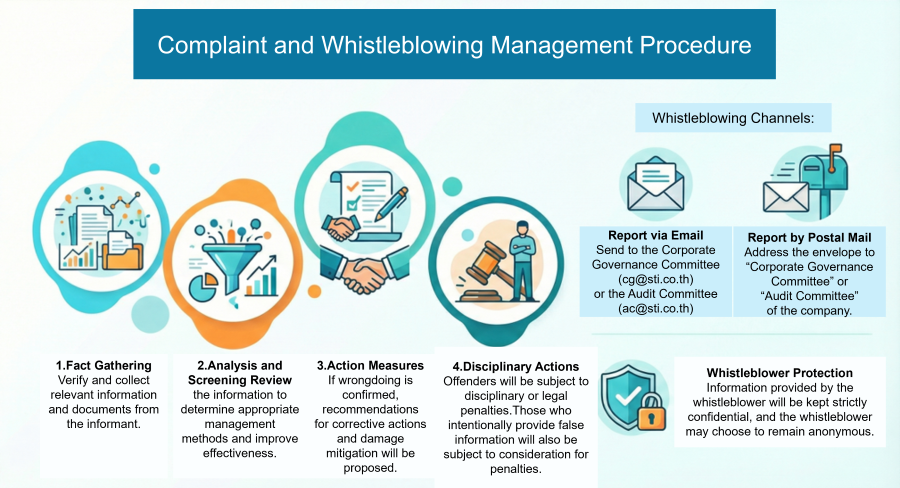
In 2025, no complaints or whistleblowing reports were received through the channels designated by the company. This is due to the company's consistent communication and emphasis on practices and measures to prevent discrimination and harassment, ensuring employees are aware and regularly reminded through internal departmental meetings and monthly management meetings.
Other Social Management
Plan & Outcomes — Description
None
Law Violation Incidents
Law Violation Incidents
| Metric | Current Year | Previous Year | Two Years Ago |
|---|---|---|---|
| The total number of cases or incidents of significant violations of laws or regulations regarding social and human rights (Cases) | 0 | 0 | 0 |
| The total number of cases or incidents that cause significant labor disputes (Cases) | 0 | 0 | 0 |
| The total number of cases or complaints related to consumer rights violations (Cases) | 0 | 0 | 0 |
| The total number of cases or complaints related to partner rights violations (Cases) | 0 | 0 | 0 |
| The total number of cases or incidents that cause disputes with the community/society (Cases) | 0 | 0 | 0 |
| The total number of cases or incidents related to cyber security or customer data breaches (Cases) | 0 | 0 | 0 |
| The total number of cases or incidents related to safety and occupational health at work (Cases) | 0 | 0 | 0 |