

Board Performance · 2025
In this section15 topics
- Compliance Monitoring — Overview1 item
- Prevention of Conflicts of Interest3 items
- Prevention of the Use of Inside Information3 items
- Anti-Corruption4 items
- Whistleblowing3 items
- Selection of Directors & Chief Executives6 items
- Selection of Independent Directors2 items
- Director Development2 items
- Evaluation of Board & Subcommittee Performance2 items
- Subcommittees1 item
- Meeting Attendance & Remuneration4 items
- Supervision of Subsidiaries & Associated Companies4 items
- Board Duty Performance — Overview2 items
- Audit Committee Duty Performance1 item
- Executive Committee Duty Performance1 item
Compliance Monitoring — Overview
Compliance Monitoring — Introduction
The Company places strong emphasis on good corporate governance and has established relevant policies and practices under its Corporate Governance Policy, Business Ethics, and Anti-Corruption Policy. The Company actively promotes effective implementation of these policies in order to build confidence among all stakeholder groups.
In 2025, the Company monitored and ensured that operations and practices were carried out in accordance with good corporate governance principles in a manner appropriate and consistent with the Company’s business context. The Company assigned the Human Resources Department and relevant functions to inform directors, executives, and all employees, including new employees, to study the Group’s corporate governance policies and practices, which are published on the Company’s website (www.sti.co.th) and the Company’s intranet.
All personnel within the Group, including all new employees in 2025, representing 100 percent, formally acknowledged and agreed to comply with the Company’s Corporate Governance Policy, Business Ethics, and other relevant corporate governance practices. These include policies and practices relating to the prevention of conflicts of interest, the use of inside information for personal gain, anti-corruption measures, and the whistleblowing mechanism through the Company’s designated intranet system. Based on the monitoring results, it was found that the Company has fully implemented the prescribed practices in all relevant areas.
Prevention of Conflicts of Interest
Has the Company Acted to Prevent Conflicts of Interest?
Yes
Operations in the Past Year
The Board of Directors has clearly established policies and guidelines for the consideration of transactions that may give rise to conflicts of interest, with the primary objective of safeguarding the interests of the Company and its shareholders as a whole. The Company has a policy prohibiting directors, executives, and employees, as well as related persons such as spouses, children, and close relatives, from seeking personal benefits that conflict with the Company’s interests, and from engaging in actions that may result in conflicts of interest.
In addition, persons who are involved in, have an interest in, or are connected with any transaction under consideration are required to disclose to the Company any relationships or connections related to such transactions. Such persons must not participate in the consideration, decision-making, or approval of the relevant transactions. The Company carefully considers transactions that may involve conflicts of interest based on disclosures of interests submitted by directors and executives, which are required to be reported annually, in order to identify and verify transactions that may give rise to conflicts of interest.
Related party transactions and transactions involving conflicts of interest must be thoroughly reviewed by the Audit Committee prior to being submitted to the Board of Directors for consideration. In entering into such transactions, the Company strictly complies with the rules and regulations of the Securities and Exchange Commission and the Stock Exchange of Thailand. Prices and terms of transactions with persons who may have conflicts of interest must be comparable to those of transactions conducted with unrelated third parties. Furthermore, the Board of Directors ensures compliance with the established procedures and the proper and complete disclosure of transactions that may involve conflicts of interest in the financial statements, the annual report, and the annual registration statement.
In 2025, the Company entered into intercompany and related party transactions that were conducted on normal commercial terms and pricing, supported the Company’s operations, were fair, and were in accordance with the Company’s related party transaction policy as well as the rules and regulations prescribed by the SEC and the SET. There were no related party transactions requiring approval from the Annual General Meeting of Shareholders, and there were no cases of fines, allegations, or civil actions imposed by the SEC or the SET in relation to the disclosure of related party transactions or asset transactions.
Number of Conflict-of-Interest Cases
| Metric | Current Year | Previous Year | Two Years Ago |
|---|---|---|---|
| Total number of cases or issues related to conflicts of interest (cases) | 0 | 0 | 0 |
Prevention of the Use of Inside Information
Has the Company Acted to Prevent the Use of Inside Information?
Yes
Operations in the Past Year
The Company has established a policy governing the use of inside information to prevent directors, executives, and employees from improperly using inside information relating to the Company and its subsidiaries for personal gain or for the benefit of related persons. This policy has been published on the Company’s website and intranet to ensure that directors, executives, and employees are informed of and comply with the following guidelines:
Directors, executives, and employees who are in possession of inside information and/or confidential information of the Company and its subsidiaries are prohibited from disclosing such information to unauthorized persons or entities, and from using such information, directly or indirectly, for personal gain or for the benefit of related persons.
Directors, executives, and/or employees of the Company who have access to financial information and/or material information relevant to the business operations of the Company and its subsidiaries that may affect the Company’s share price such as investment plans, joint ventures, mergers, acquisitions, dividend declarations or non-declarations, announcements of operating results, acquisition or loss of significant commercial contracts, significant borrowings affecting financial position and performance, issuance of additional shares, material legal disputes, significant asset purchases or disposals, tender offers for securities of other companies, changes in significant accounting policies, or business conditions must not take advantage of such information prior to its public disclosure.
In this regard, directors and executives at both executive and management levels of the Company and its subsidiaries are prohibited from trading the Company’s securities for a period of one month prior to the public disclosure of financial statements or other material business information, and must refrain from trading until the public has had sufficient time to assess such information, being at least 24 hours after information has been adequately disseminated, or 48 hours in cases where dissemination has been limited.
After the Company’s securities are listed on the Stock Exchange of Thailand, directors and executives are required to report their holdings of the Company’s securities in accordance with Section 59, in compliance with the regulations of the Securities and Exchange Commission regarding the preparation and disclosure of reports on securities holdings of directors and executives. The securities required to be reported include those held by the directors and/or executives, their spouses, and minor children, whether held directly or indirectly, where it is ultimately determined that such persons are the beneficial owners of the securities, including holdings through nominees or personal funds.
The Company provides information regarding the duties of directors and executives in reporting their securities holdings, as well as the penalties prescribed under the Securities and Exchange Act B.E. 2535 (1992), in accordance with the requirements of the Stock Exchange of Thailand. Directors and executives are required to report their securities holdings, including those of their spouses and minor children, to the SEC within 30 days from the date of appointment, and to report any changes in such holdings to the SEC within three business days from the date of purchase, sale, transfer, or receipt of transfer, or from the date on which the reporting obligation arises, in order to comply with Section 59 of the Securities and Exchange Act B.E. 2535 (1992) and for subsequent public disclosure.
The Company has established disciplinary measures for directors, executives, and employees who misuse or disclose inside information of the Company and its subsidiaries in a manner that may cause damage to the Company, in addition to any legal penalties prescribed by law. Disciplinary actions may include verbal warnings, written warnings, probation, or termination of employment by dismissal, removal, or discharge, as appropriate. Such disciplinary actions are determined based on the intent of the act and the severity of the misconduct.
Directors, executives, and employees of the Company, as well as former directors, executives, and employees who have resigned, are prohibited from disclosing inside information or confidential information of the Company, as well as confidential information of the Company’s business partners obtained in the course of their duties, to external parties, even if such disclosure does not result in damage to the Company or its business partners.
In 2025, neither the Company nor its directors or executives were subject to fines, allegations, or civil actions by regulatory authorities in connection with unfair practices or the exploitation of investors through the use of inside information by the Company’s directors or executives. The Company also complied with the SEC’s requirements regarding the reporting of changes in securities holdings following purchases or sales. Details of changes in securities holdings of the Company’s directors and executives during 2025 are as follows:
Shareholdings of STI Securities Held by Directors and Executives
For the Fiscal Year Ended 30 September 2025
Board of Directors
No. | Name-Surname | Number of Shares (shares) | Shareholding Ratio (%) | ||
as of Sep. 29, 2024 | as of Sep. 29, 2025 | Change Increase/(Decrease) | |||
1 | Mr. Jumpol Sampaopol | - | - | - | - |
Spouses and minor child | - | - | - | - | |
2 | Assoc. Prof. Dr. Sarayut Nathaphan | - | - | - | - |
Spouses and minor child | - | - | - | - | |
3 | Ms. Chawaluck Sivayathorn | - | - | - | - |
Spouses and minor child | - | - | - | - | |
4 | Mrs. Suparanan Tanviruch | - | - | - | - |
Spouses and minor child | - | - | - | - | |
5 | Mr. Worawat Srisa-an | - | - | - | - |
Spouses and minor child | - | - | - | - | |
6 | Mr. Pairuch Laoprasert | 52,643,250 | 52,643,250 | unchanged | 8.73 |
Spouses and minor child | - | - | - | - | |
7 | Mr. Somkiat Silawatanawong | 66,663,500 | 66,663,500 | unchanged | 11.06 |
Spouses and minor child | 485,550 | 543,884 | 58,334 | 0.09 | |
8 | Mr. Somchit Peumpremsuk | 50,928,300 | 50,928,300 | unchanged | 8.45 |
Spouses and minor child | - | - | - | - | |
9 | Mr. Khumpol Poonsonee | - | - | - | - |
Spouses and minor child | - | - | - | - | |
10 | Mr. Bundit Muangsornkeaw | - | - | - | - |
Spouses and minor child | - | - | - | - | |
11 | Ms. Karnsuda Sansuthi | - | - | - | - |
Spouses and minor child | - | - | - | - | |
12 | Mr. Kittisak Suphakawat* | 12,776,000 | 12,776,000 | unchanged | 2.12 |
Spouses and minor child | - | - | - | - | |
13 | Mr. Korntawat Kingngoen* | - | - | - | - |
Spouses and minor child | - | - | - | - | |
*Note: Items No. 12–13 serve as members of the Executive Committee.
Executives According to the SEC Office’s Definition
No. | Name-Surname | Number of Shares (shares) | Shareholding Ratio (%) | ||
as of Sep. 29, 2024 | as of Sep. 29, 2025 | Change Increase/(Decrease) | |||
1 | Mr. Chalermpol Taechakumthorn | 626,000 | 626,000 | unchanged | 0.10 |
Spouses and minor child | - | - | - | - | |
2 | Mr. Viroj Rojanawisute | - | - | - | - |
Spouses and minor child | - | - | - | - | |
3 | Mr. Sithichai Sereepattanapol | - | - | - | - |
Spouses and minor child | - | - | - | - | |
Number of Inside-Information Cases
| Metric | Current Year | Previous Year | Two Years Ago |
|---|---|---|---|
| Total number of cases or issues related to the use of inside information to seek benefits (cases) | 0 | 0 | 0 |
Anti-Corruption
Has the Company Acted on Anti-Corruption?
Yes
Operations in the Past Year
The Company recognizes the importance of conducting business with integrity under a good corporate governance framework, adhering to principles of good governance and business ethics, and demonstrating responsibility toward society, the environment, and all stakeholders. Accordingly, the Company is committed to operating its business with transparency, fairness, and accountability. The Company has established an Anti-Corruption Policy and published it on the Company’s website (https://www.sti.co.th) to inform shareholders, investors, stakeholders, and all relevant parties. The policy is also disseminated through the Company’s intranet and posted on internal notice boards to ensure that directors, executives, and employees acknowledge, sign, and adhere to it as a guiding principle in the Company’s operations.
The Company has established channels for receiving complaints, as well as procedures for fact-finding investigations to monitor, control, and consider disciplinary actions or remedial measures, using transparent, credible, and fair investigative processes.
The Company requires an annual review of its Anti-Corruption Policy. At the Board of Directors’ Meeting No. 4/2024–25 held on 13 August 2025, the Board resolved to review and approve the Anti-Corruption Policy for 2025 and announced it for continued implementation.
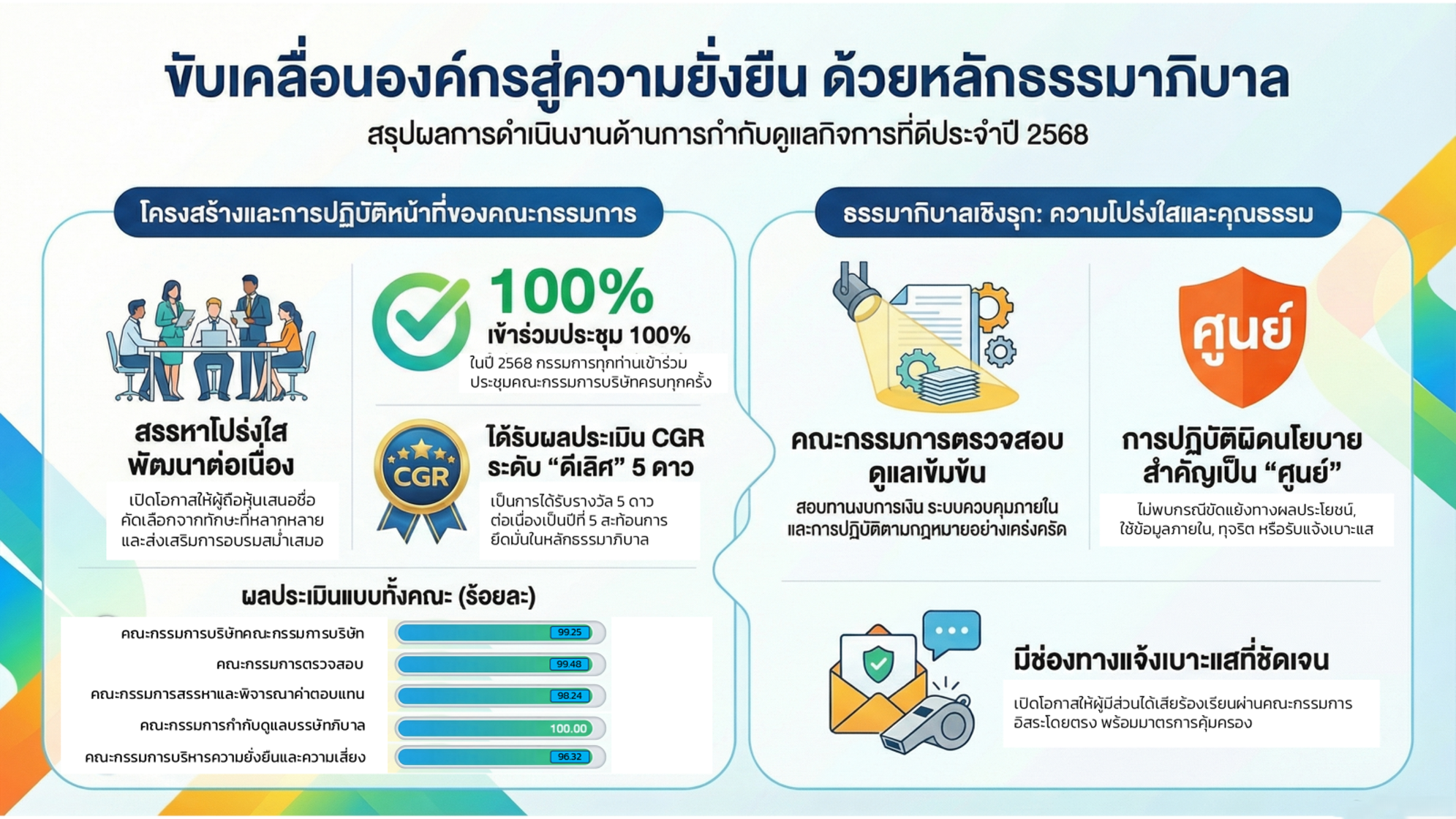
In 2025, the Company conducted an assessment of corruption-related risks within the organization and found no cases of corruption. No whistleblowing reports or complaints were received, and neither the Company nor its Board of Directors was subject to fines, allegations, or civil actions by the Securities and Exchange Commission or the Stock Exchange of Thailand in connection with corruption-related offenses.
Participation in the Thai Private Sector Collective Action Against Corruption (CAC)
With regard to participation in the Thai Private Sector Collective Action Against Corruption (CAC), the Company is currently in the process of studying and preparing for potential participation in the program.
Form of Anti-Corruption Operations
| Operation |
|---|
| Review of appropriateness in anti-corruption |
| Assessment and identification of corruption risk |
| Communication and training for employees on anti-corruption policy and guidelines |
| Review of the completeness and adequacy of the process by the Audit Committee or auditor |
| The monitoring of the evaluation of compliance with the anti- corruption policy |
Number of Corruption Cases
| Metric | Current Year | Previous Year | Two Years Ago |
|---|---|---|---|
| Total number of cases or issues related to corruption (cases) | 0 | 0 | 0 |
Whistleblowing
Has the Company Implemented Whistleblowing Procedures?
Yes
Operations in the Past Year
The Board of Directors provides opportunities for all stakeholders to report whistleblowing cases or submit complaints regarding actions that may give rise to suspicion of corruption or misconduct. Accordingly, the Company has established channels for receiving whistleblowing reports, complaints, comments, or suggestions arising from the Company’s business operations or the conduct of its employees. Whistleblowers are required to provide details of the matter being reported, together with their name, address, and contact telephone number, and submit the information through the following designated channels:
Recipients of Complaints
In cases involving allegations against employees within the organization, reports should be submitted to the Corporate Governance Committee.
In cases involving allegations against directors of the Company or the Chief Executive Officer, reports should be submitted to the Audit Committee.
These channels provide direct access to the Board of Directors (without going through Company management). The Board has assigned the Audit Committee, whose members are all independent directors, to receive such reports or complaints and conduct investigations, and to report the findings to the Board of Directors.
Complaints may also be submitted in writing through the following channels:
1) Via email to the designated recipients:
Corporate Governance Committee: cg@sti.co.th, or
Audit Committee: ac@sti.co.th
2) By mail to the following address:
Corporate Governance Committee or Audit Committee
Stonehenge Inter Public Company Limited
163 Soi Chokchai Ruammit (Ratchada 19), Ratchadaphisek Road
Din Daeng Sub-district, Din Daeng District Bangkok 10400
Measures for Protection and Confidentiality of Whistleblowers
In cases where whistleblowers choose not to disclose their identity, they must provide sufficiently clear factual details or evidence demonstrating reasonable grounds to believe that corruption or misconduct has occurred. All complaints will be treated with the utmost confidentiality, and disclosure of the whistleblower’s identity is not required. However, if the whistleblower chooses to disclose their identity, this will enable the Company to request additional information regarding the complaint and to inform the whistleblower of the outcome of the investigation.
The Company has measures in place to protect and maintain the confidentiality of whistleblowers and complainants. Full details are set out in the Group’s Policy on Protection and Fair Treatment of Employees Who Report or Provide Information on Corruption or Non-Compliance with Laws, Regulations, Company Rules, and Business Ethics (Whistleblower Policy), as published on the Company’s website at https://www.sti.co.th.
In 2025, the Company did not receive any whistleblowing reports or complaints, and this was regularly reported to the Audit Committee, whose members are independent directors.
Number of Whistleblowing Cases
| Metric | Current Year | Previous Year | Two Years Ago |
|---|---|---|---|
| Total number of cases or issues received through whistleblowing channels (cases) | 0 | 0 | 0 |
Selection of Directors & Chief Executives
Selection — Introduction
The Company provides shareholders with the opportunity to participate in proposing candidates for nomination as directors at least three months prior to the end of each fiscal year. Such proposals are announced through the information disclosure system of the Stock Exchange of Thailand and on the Company’s website. In 2025, no shareholder proposed any individual for election as a director of the Company.
In considering the reappointment of existing directors for an additional term, the Nomination and Remuneration Committee takes into account various factors, including performance results, attendance and level of participation in meetings, as well as contributions to the activities of the Board of Directors. In the case of independent directors, the independence of such directors is also taken into consideration.
Orientation for New Directors
In the event that new directors are appointed, the Company provides an orientation program to prepare them for their roles as directors. The Company Secretary arranges meetings between newly appointed directors, existing directors, and senior executives, enabling new directors to receive information on the Company’s business operations and other relevant matters, as well as to raise any questions. In addition, company profile materials and other documents useful for the performance of directors’ duties are provided to newly appointed directors.
In 2025, the Company did not appoint any new directors. Nevertheless, the Company regularly distributed information and guidelines related to directors’ duties issued by relevant regulatory authorities to the Board of Directors and sub-committees, ensuring that directors are kept informed of current and up-to-date information that is beneficial to the effective performance of their duties.
Directors & Chief Executives — Introduction
Director Nomination
The Nomination and Remuneration Committee is responsible for recruiting suitably qualified individuals to serve as directors and independent directors. Consideration is given to diversity, skills, and experience that align with the Company’s current and future business strategies. The Committee also considers candidates proposed by shareholders, directors, and those listed in the Director Pool database of the Thai Institute of Directors (IOD). Qualified candidates are then proposed to the Board of Directors for appointment or submitted for approval by the shareholders’ meeting in accordance with the Company’s Articles of Association.
Nomination of Top Executives
The Nomination and Remuneration Committee selects candidates who fully meet the prescribed qualifications for appointment to top executive positions, starting from the Chief Executive Officer level and above. Key consideration criteria include qualifications, knowledge, capabilities, business experience, management approach, and vision that are aligned with those of the Board of Directors, in order to ensure the Company’s operations achieve the established objectives. The Committee proposes selected candidates to the Board of Directors for appointment. In this regard, the Chief Executive Officer is not the same person as the Chairman of the Board, in order to ensure an appropriate balance between management and corporate governance.
Succession Plan
The Company has established an appropriate and transparent recruitment and selection plan for personnel to assume all key senior management positions, in order to mitigate the risk of shortages in critical roles, particularly at the senior executive level. The Board of Directors has assigned the Nomination and Remuneration Committee to recruit and select suitable candidates for the position of Chief Executive Officer, as well as to prepare, review, and update the succession plan by selecting qualified individuals from both within and outside the organization.
For other senior executive positions, the Board of Directors requires the Chief Executive Officer and senior executives to prepare development and/or succession plans for successors, to ensure business continuity in the event that they are unable to perform their duties for any reason. This includes identifying qualified individuals capable of assuming such roles, with a focus on high-potential and high-performing individuals who possess vision, knowledge, and capabilities to advance to senior management positions in the future. Each successor will receive individualized development in accordance with the established plans.
The recruitment and succession planning process for senior executives can be summarized as follows:
The Nomination and Remuneration Committee determines the required qualifications, knowledge, capabilities, and experience of senior executives, including the Chief Executive Officer, Chief Operating Officer, and/or Chief Officers of various business lines. The recruitment process follows the Committee’s established procedures and considers both internal and external candidates who meet the specified criteria and demonstrate the potential to succeed in each functional area.
The Chief Executive Officer evaluates the competencies of internal executives who possess suitable qualifications and satisfactory performance appraisal results consistent with the required competency levels, in order to develop individual development plans. The Human Resources Department is assigned to monitor and ensure that successors receive appropriate training and development to prepare them for their roles.
The Chief Executive Officer may assign qualified executives to perform duties or take responsibility for challenging assignments in order to assess their potential and readiness to assume successor roles.
The Chief Executive Officer reports performance results and progress on individual development plans of potential successors to the Nomination and Remuneration Committee on an annual basis.
The Nomination and Remuneration Committee reviews and summarizes the succession planning outcomes for the Chief Executive Officer, business line chief executives, or senior executives, and reports the results to the Board of Directors annually.
Are Directors Selected Through the Nomination Committee?
Yes
Are Chief Executives Selected Through the Nomination Committee?
Yes
Rights of Minority Shareholders on Director Appointment
Each shareholder is entitled to one vote per share.
Shareholders shall cast their votes to elect directors on an individual basis.
The candidates who receive the highest number of votes, in descending order, shall be elected as directors up to the number of directors to be elected at that shareholders’ meeting. In the event that candidates in the subsequent order receive an equal number of votes exceeding the number of directors to be elected, the Chairman of the meeting shall have the casting vote to decide.
Method of Director Appointment
| Method |
|---|
| Method whereby each director requires approval votes more than half of the votes of attending shareholders with voting rights |
Selection of Independent Directors
Criteria for Selecting Independent Directors
In the event that a director’s position becomes vacant, the Nomination and Remuneration Committee is responsible for recruiting a new director through a transparent nomination process and clear criteria. Consideration is given to qualifications, experience, knowledge, competencies, and expertise, including professional skills, specific areas of specialization, gender, age, without restriction on race or nationality, together with diversity in the composition of the Board of Directors. In addition, vision, leadership, independence, knowledge and experience relevant to the Company’s business, as well as the ability to devote sufficient time to the performance of directors’ duties, are taken into account.
Sources of Director Nomination
The Nomination and Remuneration Committee recruits suitably qualified individuals to serve as directors of the Company from various sources, including:
Proposals or recommendations from the Board of Directors.
External advisory firms.
The right of minority shareholders to propose director candidates.
The Director Pool database of the Thai Institute of Directors (IOD).
Reappointment of Directors upon Completion of Term
The Nomination and Remuneration Committee considers the suitability of directors for reappointment in accordance with relevant criteria, as well as each director’s performance during the past term. Such consideration is based on performance evaluation results, meeting attendance, participation in meetings, and involvement in various Board activities. The Committee then summarizes its opinion for submission to the Board of Directors, prior to proposing the reappointment of directors whose terms have expired for approval by the shareholders’ meeting.
The appointment of independent directors is conducted in accordance with the Company’s definition of independent directors, as prescribed by the Capital Market Supervisory Board and in line with good corporate governance principles. In 2025, none of the Company’s independent directors had any business relationships or provided professional services to the Company, its subsidiaries, major shareholders, or controlling persons.
Appointment and Removal of Directors by Shareholders
Shareholders have the authority to appoint and remove directors through resolutions of the shareholders’ meeting, in accordance with the Company’s Articles of Association and relevant legal requirements. The nomination and appointment process must be transparent and clearly defined, and provide opportunities for minority shareholders to propose candidates for directorship through the nomination process of the Nomination and Remuneration Committee. Such candidates are then carefully considered by the Board of Directors to ensure suitability for appointment.
Appointment by the Board of Directors
In the event that a director’s position becomes vacant for reasons other than the expiration of term, the Board of Directors shall appoint a qualified individual who does not possess any prohibited characteristics under the Public Limited Companies Act and the Securities and Exchange Act to fill the vacancy at the next Board meeting, unless the remaining term is less than two months. The appointed director shall hold office only for the remaining term of the director whom he or she replaces.
Qualifications of Independent Directors
Independent directors must not serve as executives and must be independent from management and controlling shareholders. They must have no business relationships with the Company or its subsidiaries that could impair their ability to express independent opinions, and must possess the qualifications as prescribed by the Capital Market Supervisory Board. The full qualifications of independent directors are set out in the Group’s Corporate Governance Policy, as disclosed on the Company’s website at https://www.sti.co.th/good-corporate-governance and presented in Appendix 5 of the 2025 Annual Registration Statement (Form 56-1 e-One Report).
In 2025, no candidates were proposed by shareholders to the Nomination and Remuneration Committee for consideration. Accordingly, the Committee considered directors whose terms expired at the 2025 Annual General Meeting of Shareholders, taking into account their educational background, skills, work experience, performance during the past year, and other qualifications aligned with the Company’s business strategy. The Committee then proposed to the Board of Directors that the Company’s two independent directors met the required composition under the Board Skill Matrix and were consistent with the Company’s business strategy.
Did Any Independent Director Have a Business or Professional Relationship?
No
Director Development
Director Development — Introduction
At present, all members of the Board of Directors have completed training programs relevant to the performance of directors’ duties organized by the Thai Institute of Directors Association (IOD – Thai Institute of Directors Association). Details of each director’s participation in training programs conducted by the Thai Institute of Directors Association (IOD) are disclosed in the profile of each director in Appendix 1: Information on Directors, as part of the 2025 Annual Registration Statement (Form 56-1 e-One Report).
Development of Directors in the Past Year
In 2025, the Board of Directors also participated in additional training programs that were relevant to or beneficial for the performance of directors’ duties, as follows:
Evaluation of Board & Subcommittee Performance
Criteria for Evaluating Board Performance
In accordance with the principles of good corporate governance for listed companies, it is recommended that the board of directors and sub-committees of listed companies conduct self-performance evaluations at least once a year. This enables the board to collectively review its performance and identify areas for improvement, through both collective and individual evaluations.
Accordingly, the Company conducts performance evaluations of the Board of Directors and its sub-committees every October as a tool to support directors in reviewing and enhancing the efficiency and effectiveness of their duties. The evaluation criteria are based on the IOD Board Toolkit of the Thai Institute of Directors Association, which is used as a guideline in developing the Company’s evaluation forms. The evaluation process is as follows:
The Company Secretary distributes evaluation forms to each director. In the current year, the evaluation was conducted online via Google Forms to promote paper reduction and ensure faster and more accurate data processing.
Evaluation results, comments, and recommendations are compiled and submitted to each board and sub-committee for consideration.
The evaluation results of all boards and sub-committees are presented to the Board of Directors.
Evaluation of Board Performance in the Past Year
In 2025, the results of the performance evaluation of the Board of Directors, both on a collective basis and an individual (self-assessment) basis, were presented to the Board of Directors’ Meeting No. 1/2025–26 held on 20 November 2025. The summary is as follows:
The collective evaluation of the Board of Directors comprised six areas: 1.Board structure and composition 2.Roles, duties, and responsibilities of the Board 3.Board meetings 4.Board dynamics and performance 5.Relationship with management 6.Director development.
The individual evaluation of the Board of Directors comprised five areas: 1.Board structure and composition 2.Readiness to perform duties 3.Board meetings 4.Roles, duties, and responsibilities of the Board 5.Relationship with management.
The collective evaluation of sub-committees comprised four areas: 1.Committee structure and composition 2.Committee meetings 3.Roles, duties, and responsibilities 4.Committee reporting.
The summary of the evaluation results of each board and sub-committee for the year 2025 showed the following average scores:
List of Directors | Collective Evaluation Results, | Individual Evaluation Results |
The Board of Directors | 99.25% | 99.62% |
The Audit Committee | 99.48% | - |
The Nomination and Remuneration Committee | 98.24% | - |
The Corporate Governance Committee | 100.00% | - |
The Sustainability and Risk Management Committee | 96.32% | - |
Performance Evaluation of the Chief Executive Officer
The Board of Directors has assigned the Nomination and Remuneration Committee to conduct an annual performance evaluation of the Chief Executive Officer. The evaluation criteria comprise ten areas: 1.Leadership 2.Strategy formulation 3.Strategy execution 4.Financial planning and performance 5.Relationship with the Board of Directors 6.External relations 7.Management and relationships with personnel 8.Succession planning 9.Knowledge of products and services 10.Personal attributes.
The Nomination and Remuneration Committee conducted the performance evaluation of the Chief Executive Officer and used the results as a basis for determining the Chief Executive Officer’s remuneration. The evaluation results for 2025 indicated that the Chief Executive Officer performed successfully at a good level in accordance with the established criteria, effectively driving the Company’s operations to achieve its objectives, while also planning and adjusting management strategies in a timely manner to respond to changing circumstances.
Subcommittees
Subcommittees
| Results of the Subcommittee's Duty Performance |
|---|
The Nomination and Remuneration Committee performed its duties during the 2025 fiscal year (from 1 October 2024 to 30 September 2025). A total of two meetings were held during the year. The key performance highlights are summarized as follows:
|
The Corporate Governance Committee performed its duties during the 2025 fiscal year (1 October 2024 – 30 September 2025). A summary of its key performance is as follows:
|
The Sustainability and Risk Management Committee performed its duties during the 2025 fiscal year (1 October 2024 – 30 September 2025). Meetings were held on a quarterly basis, and the results of operations were reported to the Audit Committee and the Board of Directors on each occasion. A summary of the key performance is as follows:
During 2025, the Group consistently monitored and managed risks, enabling effective control of key risks across departments and subsidiaries at acceptable levels. No significant factors or events were identified that could have a material impact on the Company. |
Meeting Attendance & Remuneration
Meeting Attendance — Sub-section Introduction
The Company schedules meetings of the Board of Directors and sub-committees in advance for the entire year. The Company Secretary informs directors of the annual meeting schedule in advance, starting from the end of the preceding fiscal year prior to the meetings in the following fiscal year, to enable directors to plan their time and attend meetings accordingly. Generally, Board meetings are held within the second week of the month prior to the announcement of quarterly financial statements and within 45 days prior to the announcement of the annual financial statements.
The Company Secretary distributes meeting notices together with supporting documents to directors at least seven days in advance of each meeting, allowing sufficient time for review. The Chairman of the Board presides over the meetings and ensures that adequate time is allocated for each agenda item, providing directors with the opportunity to freely express their opinions. Resolutions of the Board of Directors require the presence of at least two-thirds of the total number of directors at the time of voting on each agenda item.
In 2025, each director attended no less than 75 percent of the scheduled meetings of the Board of Directors and sub-committees, in compliance with the requirements stipulated in the Company’s corporate governance policy. In addition, the Company adopted video conferencing technology and electronic systems for the distribution of meeting documents to enhance meeting efficiency and facilitate the participation of directors.
For Board of Directors’ meetings, in cases where a director is unable to attend the meeting at the designated on-site location, the director may participate via electronic means. The list of directors who attended Board meetings through electronic media in 2025 is as follows:
No. | Name-Surname | Number of attendances / Total number of meetings |
1 | Mr. Jumpol Sampaopol | - |
2 | Assoc. Prof. Dr. Sarayut Nathaphan | - |
3 | Ms. Chawaluck Sivayathorn | - |
4 | Mrs. Suparanan Tanviruch | 2/4 |
5 | Mr. Pairuch Laoprasert | - |
6 | Mr. Somkiat Silawatanawong | 2/4 |
7 | Mr. Somchit Peumpremsuk | - |
8 | Mr. Worawat Srisa-an | 3/4 |
9 | Mr. Khumpol Poonsonee | 3/4 |
10 | Mr. Bundit Muangsornkeaw | 3/4 |
11 | Ms. Karnsuda Sansuthi | 3/4 |
Types of Remuneration of the Board of Directors
1.Monetary Remuneration, consisting of:
(1) Directors’ remuneration, consisting of monthly remuneration and meeting attendance fees, at the following rates:
List of Committees | Remuneration for Directors | |||
The Chairman of the Board | Director | |||
Remuneration monthly (baht/month) | Meeting Allowance (Baht/time) | Remuneration monthly (baht/month) | Meeting Allowance (Baht/time) | |
The Board of Directors | 20,000 | 25,000 | 15,000 | 20,000 |
The Audit Committee | - | 20,000 | - | 15,000 |
The Nomination and Remuneration Committee | - | 20,000 | - | 15,000 |
The Corporate Governance Committee | - | 20,000 | - | 15,000 |
The Executive Committee | - | - | - | - |
The Sustainability and Risk Management Committee | - | - | - | - |
(2) Special remuneration, whereby the Nomination and Remuneration Committee approved the payment of special remuneration to four independent directors, within the overall remuneration cap approved by the Company’s 2025 Annual General Meeting of Shareholders, with a total amount not exceeding THB 6 million.
2.Other Remuneration
The Company does not grant any other benefits to directors. However, the Company bears expenses related to training and seminar programs organized by the Thai Institute of Directors Association and other relevant institutions that are beneficial to the performance of directors’ duties. In addition, the Company provides Directors and Officers Liability Insurance with coverage of THB 50 million for a one-year policy period, which is renewed annually. In 2025, there were no claims made under this insurance policy.
Remuneration of Directors and Executives Who Serve as Directors in Subsidiaries Engaged in the Core Business
Monetary Remuneration
Boards of Directors of Subsidiaries
No monetary remuneration is paid to directors of subsidiaries.
Executives of Subsidiaries
Monetary remuneration for subsidiary executives comprises salary and bonus.
Other Remuneration
No other benefits are provided.
Nevertheless, subsidiaries continue to provide a provident fund and various welfare benefits, such as social security contributions, accident insurance premiums, life insurance, and professional indemnity insurance, among others.
Remuneration of the Board of Directors
Remuneration or Benefits Payable to the Board
| Metric | Amount (Baht) |
|---|---|
| Remunerations or benefits pending payment to the board of directors over the past year (baht) | 0 |
Supervision of Subsidiaries & Associated Companies
Does the Company Have Subsidiaries or Associated Companies?
Yes
Is There a Mechanism for Overseeing Subsidiaries and Associated Companies?
Yes
Mechanism for Overseeing Management of Subsidiaries
The Company has a policy to invest in other businesses that are related to or supportive of its core business, focusing on businesses with strong potential and the ability to generate long-term returns. The Company closely supervises and oversees the management of its subsidiaries and associates to continuously and sustainably safeguard the value of its investments, as well as to create added value and enhance confidence among stakeholders. Accordingly, the Company has established policies for the control and supervision of subsidiaries and associates in which it has invested, as follows:
The Company shall appoint individuals approved by the Board of Directors’ meeting to serve as directors and executives of subsidiaries in proportion to the Company’s shareholding, in order to supervise operations and determine management policies as if such subsidiaries were business units of the Company. Subsidiaries are required to engage the same auditor as the Company and prepare financial statements in accordance with financial reporting standards. The Company shall have the right to appoint the Managing Director or equivalent position and the Chief Financial Officer. The number of individuals appointed as directors of subsidiaries shall be in proportion to the Company’s shareholding or as otherwise agreed.
For investments in associates, the Company shall appoint representatives approved by the Board of Directors’ meeting to serve as directors of associates in proportion to its shareholding. Such representatives must possess appropriate qualifications and experience relevant to the management of the associate’s business.
Directors or executives acting as the Company’s representatives are authorized to perform their duties within their scope of authority to protect the best interests of the Company. They must regularly report operating results and material changes in business operations of subsidiaries and associates to the Executive Committee on a monthly basis and to the Board of Directors on a quarterly basis. In addition, when subsidiaries or associates seek approval for significant matters such as the acquisition or disposal of significant assets, joint ventures, capital increases or reductions such matters must be submitted to the Company’s Board of Directors for consideration and approval.
Subsidiaries are required to prepare annual business plans and profit and loss forecasts for inclusion in the consolidated budget to be submitted to the Board of Directors for approval, together with investment projects and workforce plans. Subsidiaries must also submit monthly operating performance reports. Furthermore, subsidiaries are required to provide information or documents related to their operations to the Company upon request, as appropriate. If the Company identifies any material issues, it may request clarification and/or supporting documents from the subsidiaries for its consideration.
The Company shall ensure that subsidiaries and associates comply with the rules, regulations, and notifications of the Stock Exchange of Thailand and the Securities and Exchange Commission, including requirements relating to connected transactions, the acquisition or disposal of assets, and other material transactions. Directors and executives of subsidiaries, as well as their related persons, are required to disclose to the subsidiary’s board any relationships or transactions with the subsidiary that may give rise to conflicts of interest, and to avoid entering into transactions that may result in conflicts of interest. The board of the subsidiary is required to inform the Company of such matters. Directors and executives of subsidiaries must not participate in the approval of matters in which they have an interest or a conflict of interest.
The Company shall ensure that subsidiaries and associates maintain appropriate and adequate internal control systems. The Company’s internal audit function is assigned to assess the effectiveness of governance, risk management, and internal controls of subsidiaries and associates, and to report the results of internal audits to the Audit Committee and the Board of Directors on a quarterly basis.
Oversight Mechanisms
| Mechanism |
|---|
| Sending representatives to act as directors, executives or controlling persons in proportion to shareholdings |
| Defining the scope of powers, duties and responsibilities of directors and executives who represent the company in setting important policies |
| Disclosure of financial information and operating results |
| Transactions between the Company and related persons |
| Other important transactions |
| Acquisition or disposal of assets |
| Internal control system of the subsidiary operating the core business is appropriate and sufficient in the subsidiary operating the core business |
Board Duty Performance — Overview
Board Duty Performance — Overall Description
The Board of Directors recognizes the importance of conducting business in accordance with good corporate governance principles, based on transparency, accountability to all stakeholders, the creation of sustainable long-term returns, and consideration of social and environmental impacts. The Board has performed its duties in collaboration with the Executive Committee and senior management by reviewing and updating policies, directions, and business strategies to ensure alignment with the Company’s long-term business direction, taking into account changes in the business environment and supporting the organization’s sustainable development. In this regard, the Board approved corporate policies, the annual business plan, and the annual budget; reviewed the adequacy of the internal control system and appropriate risk management; and oversaw management’s communication of the Company’s plans, objectives, and business strategies to employees. Management regularly reports operating performance to the Executive Committee on a monthly basis and to the Board of Directors on a quarterly basis. In addition, the Board reviewed and updated the corporate governance policy, business ethics, and other relevant policies to ensure compliance with applicable laws and corporate governance best practices, with the aim of promoting the Group’s business operations in line with long-term sustainable development principles.
Section Introduction
Audit Committee Duty Performance
Results of the Audit Committee's Duty Performance in the Past Year
The Audit Committee of Stonehenge Inter Public Company Limited performed its duties during the 2025 fiscal year (1 October 2024 – 30 September 2025), with a summary as follows:
Composition and Meeting Attendance
The Audit Committee consists of three independent directors who fully meet the qualifications prescribed by the Securities and Exchange Commission (SEC) and the Stock Exchange of Thailand (SET).
Meetings were held on a quarterly basis, and all three Audit Committee members attended every meeting (4 out of 4 meetings).
Review of Financial Reports
Reviewed both quarterly and annual financial statements in conjunction with management and the external auditor.
Conclusion: The financial statements fairly present the financial position and operating results, are accurate, complete, and reliable, and are prepared in accordance with financial reporting standards. No items were identified that would have a material impact on the financial statements.
One meeting was held with the external auditor without management present.
Review of Internal Control and Internal Audit
Appointed Honor Audit and Advisory Co., Ltd. as the internal audit service provider.
Reviewed management’s assessment of the internal control system in accordance with SEC guidelines.
Conclusion: The Company’s internal control system is appropriate and sufficiently effective for business operations, and no material risk issues were identified.
Review of Sustainability and Risk Management
Oversight of key risks (strategic, operational, financial, legal, and anti-corruption), supported by the Sustainability and Risk Management Committee, which supervises and promotes sustainability development in alignment with risk management.
Conclusion: Risk management has been effectively implemented, with risks maintained at acceptable levels.
Review of Compliance with Laws and Relevant Policies
Oversaw the Company’s compliance with laws governing securities and the securities market, including the anti-corruption policy.
Conclusion: No indications were found that the Company failed to comply with, or acted contrary to, applicable laws, rules, or regulations.
Consideration and Selection of the External Auditor
Approved the appointment of the auditor from EY Office Limited as the Company’s external auditor.
The audit fee for the relevant period amounted to THB 2,170,000.
Review of Related Party Transactions
Conclusion: Related party transactions were conducted on normal commercial terms, involved no conflicts of interest, were reasonable, and fully complied with the rules and regulations prescribed by the SET.
Review and Revision of the Audit Committee Charter
The Audit Committee Charter is reviewed annually to ensure alignment with good corporate governance principles.
Overall Summary and Key Observations
The Audit Committee performed its duties with knowledge, due care, prudence, and an appropriate level of independence.
During the past year, no events or actions were found or suspected that could have a material impact on the Company’s financial position or operating results.
The Audit Committee did not receive any complaints or whistleblowing reports from stakeholders in 2025.
Executive Committee Duty Performance
Results of the Executive Committee's Duty Performance in the Past Year
The Executive Committee performed its duties during the 2025 fiscal year for the period from 1 October 2024 to 30 September 2025. During this period, a total of 12 meetings were held to consider, review, oversee, and provide recommendations on key matters relating to corporate management and the business operations of the Group.
A summary of the Executive Committee’s performance during 2025 is as follows:
Monitoring and Oversight of Operating Performance
The Committee regularly monitored the Group’s operating performance on a monthly basis.
Financial Position Oversight
Oversaw management to ensure the Company’s financial position was managed with adequate liquidity and stability to support ongoing business operations.
Review of Strategy and Business Plans
Provided recommendations to management on the review of strategies, business plans, and the annual budget for 2025 to ensure alignment with economic conditions during the year, amid business challenges faced by the Group.
Assessment of Key Challenges and Situations
Closely monitored significant situations, such as substantial increases in energy prices, rising interest rates, volatile inflation (affecting employees’ cost of living and higher prices of goods and services), as well as political uncertainty and relevant government policies.
Approval of Financial and Investment Matters
Approved matters relating to finance, investment, and the Company’s assets within the scope of delegated authority, under the annual expenditure budget approved in principle and/or as assigned by the Board of Directors.
Working Capital Management
Approved investments in financial institutions for the purpose of managing the Company’s working capital.
Consideration of the 2026 Plan and Long-Term Objectives
Considered and provided opinions on the appropriateness of strategies, work plans, and budgets for the 2026 fiscal year prepared by management, as well as long-term goals and strategies, prior to submission to the Board of Directors for approval.